Michošana – a wedding tradition that unites generations
An old and emotionally saturated wedding ritual, which symbolizes the transition from the status of a young girl and a boy to being married - that is exactly the meaning of the michosana tradition. Mixing has long been a special moment at a wedding , which today's couples often vary - supplement, change the usual or even completely replace it with something else, for example, time for the two of them alone, which tends to be lacking on such a busy wedding day. Let's take a look - what are the traditions of wedding ceremonies and what to put in place if traditions are not to your heart and you want to experience an authentic and unique wedding.
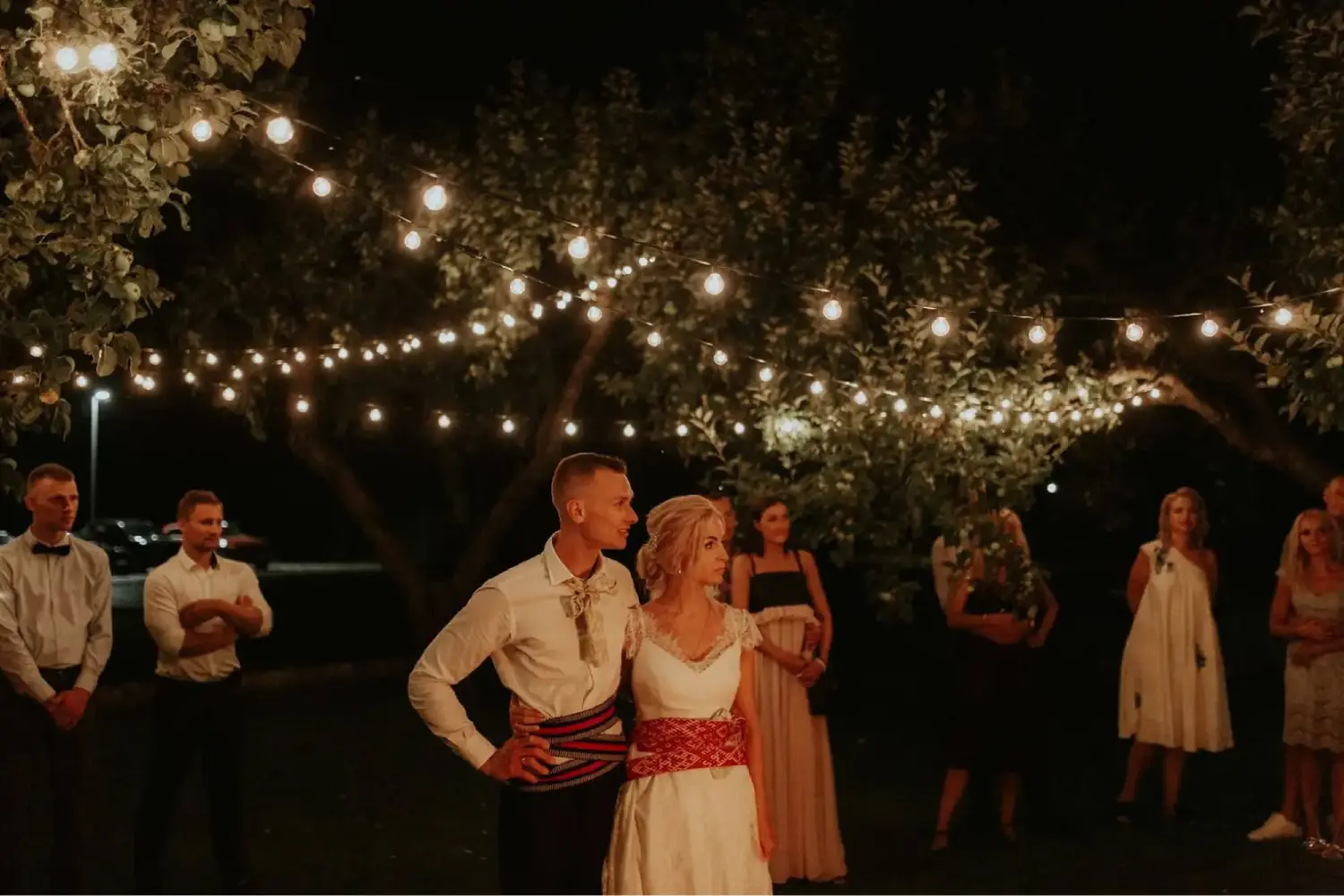
Photo: INTA LANKOVSKA / www.intaphotography.com
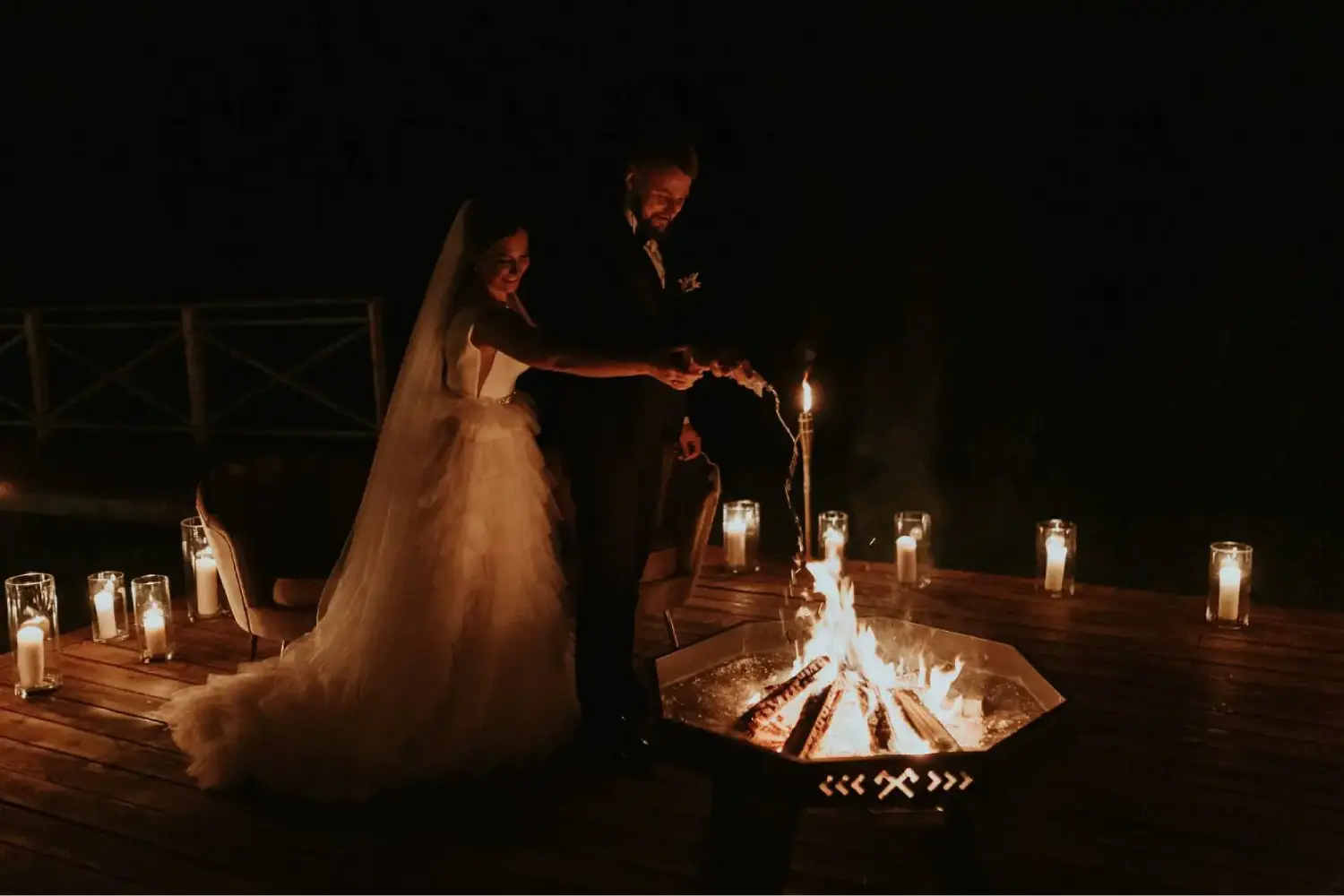
The michošana is the end of the official part of the wedding, which today wedding organizers recommend to be done no later than 10 pm, but previously the michošana was held even at midnight - by the fire or by candlelight. The ancient Latvians didn't wait for the night to go to the farm - they had to go home to the cattle one way or another and get up in time. After the ceremony, the young couple was taken to the barn to sleep.
It is recommended to think about the choice of the most suitable time, because the procession is not a party, but a tradition that deserves respect. It is especially important to plan the party not so late, if alcohol is used at the wedding and it is expected that the guests will be a little drunk in the evening. In addition, if the guests include older people, grandparents, for whom the long wedding day is a challenge, an earlier ceremony will allow them to enjoy this blessed ritual as well.
In the past, when Latvians lived more in the countryside than in the city, they chose to celebrate weddings in autumn, when the major works were finished and the new summer and autumn crops were harvested - it was practically the most suitable and wealthiest time of the year to get married. There was also the grandmother of the hen party – the ritual of the bridal bath, which today's self-conscious brides are happy to bring back into the sun, replacing crazy partying with cleansing and strengthening the body and soul in a modern sense of spirituality before entering the new role.
From a wreath of flowers to an aube
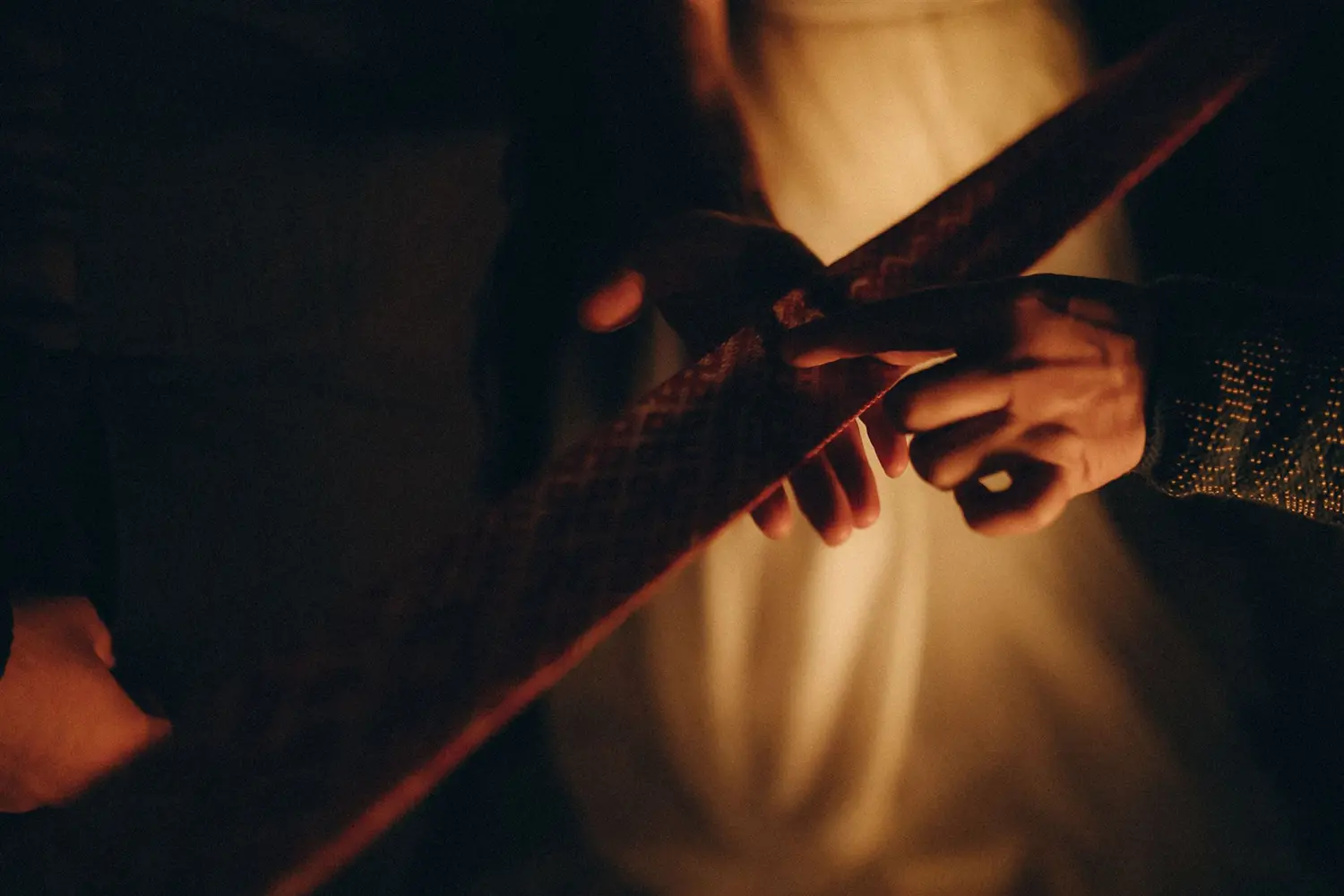
Before the bride's veil appeared on the wedding stage, Latvian women pulled the crown. The exchange of a bride's flower crown or crown for an aubi, a wife's hat or a scarf symbolizes her transition to the role of a wife, where there are other responsibilities and duties, as well as honor.
Under the guidance of the folklore group
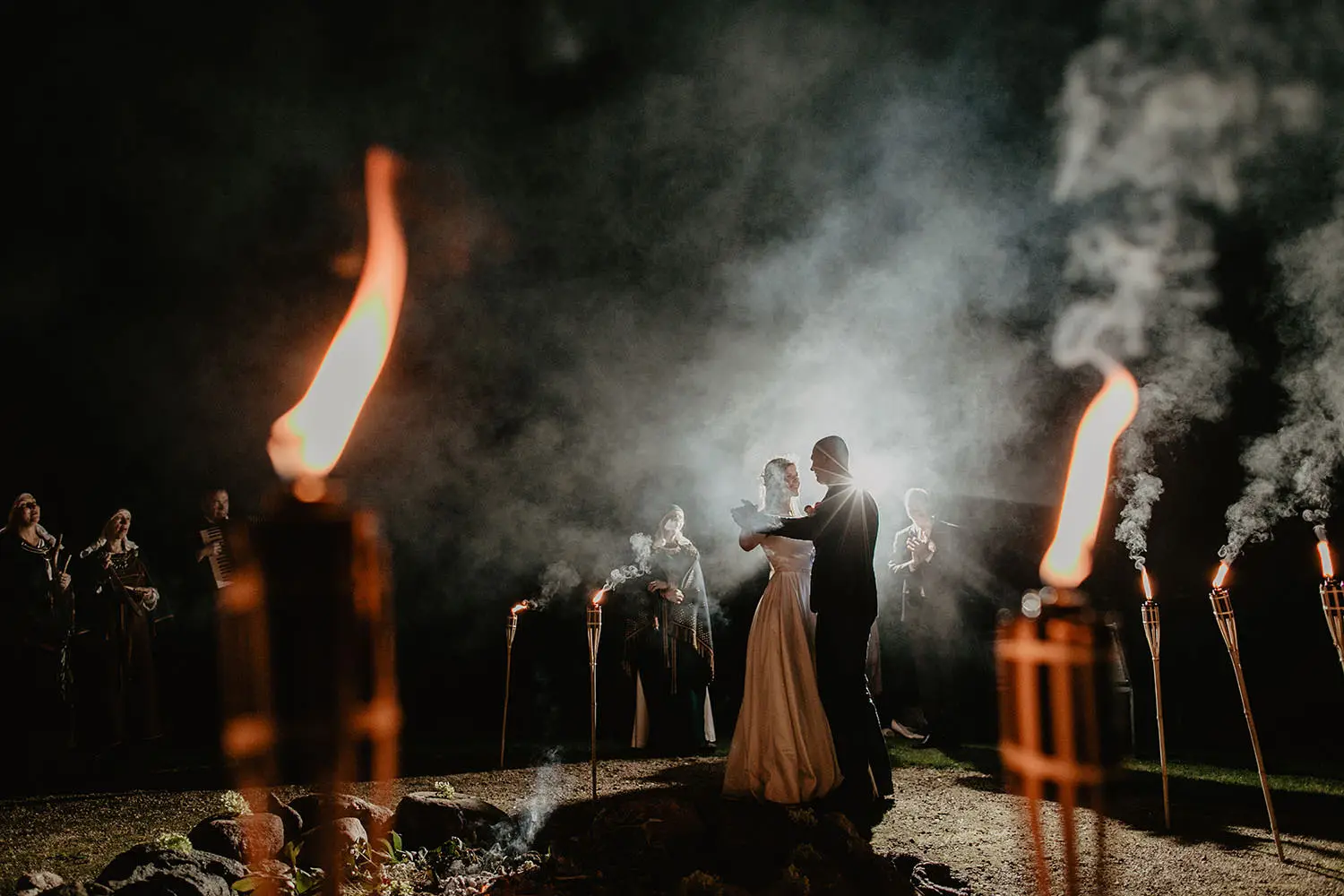
The Mičošana ritual is accompanied by songs, which, if there is a desire to feel the Latvian traditions, are sung by the invited folklore group. Accompanied by folk songs, the michosana ritual also becomes a performance for the guests - especially it fascinates couples where one of the newlyweds is a foreigner, so this is an opportunity to introduce Latvian traditions to foreign guests.
Photo: INTA LANKOVSKA / www.intaphotography.com
The most famous suit mixing song:
"What do you want, little sister?"
I went to watch the rose for a year,
Did a big tree grow, or did a beautiful flower bloom.
I plucked a flower, pinned a wreath,
Sunday morning followers in the church.
Met a compatriot for the colt's mile,
The countryman demanded: Give the blame!
What do you want, little sister, for guilt?
Do you want me to give the rye a seed?
I don't want, I don't want, it's for myself.
What do you want, little sister, for guilt?
Do you want me to give seed to the wheat?
I don't want, I don't want, it's for me.
What do you want, little sister, for guilt?
Do you want me to give you a carriage?
I want it, I want it, I don't have it.
Other national material elements
In the Mičošana ritual activities, material values that have been known since ancient times are also used - linen towels, woolen blankets, villaines, colorful scarves, which are current in the couple's region - be it Kurzeme or Latgale or another region.
A fertility ceremony where alcohol is superfluous
Modern weddings are often without the presence of alcohol, moreover, artificially created intoxication is not appropriate for the michosana tradition. Michoshana is a fertility ceremony where we take action on what we have gained in the past and manifest about the future.
Photo: CLYDE LIELBSIS
Alternative mixing rituals
As long as you're open to it, the ritual of michization can be adapted to your authentic sense of the world, combining tradition with other elements that are important to you. Or – replace it with other rituals or activities. One of the most recommended options is to deliberately schedule time for the two of you, which most likely will have been lacking during the intense wedding day.
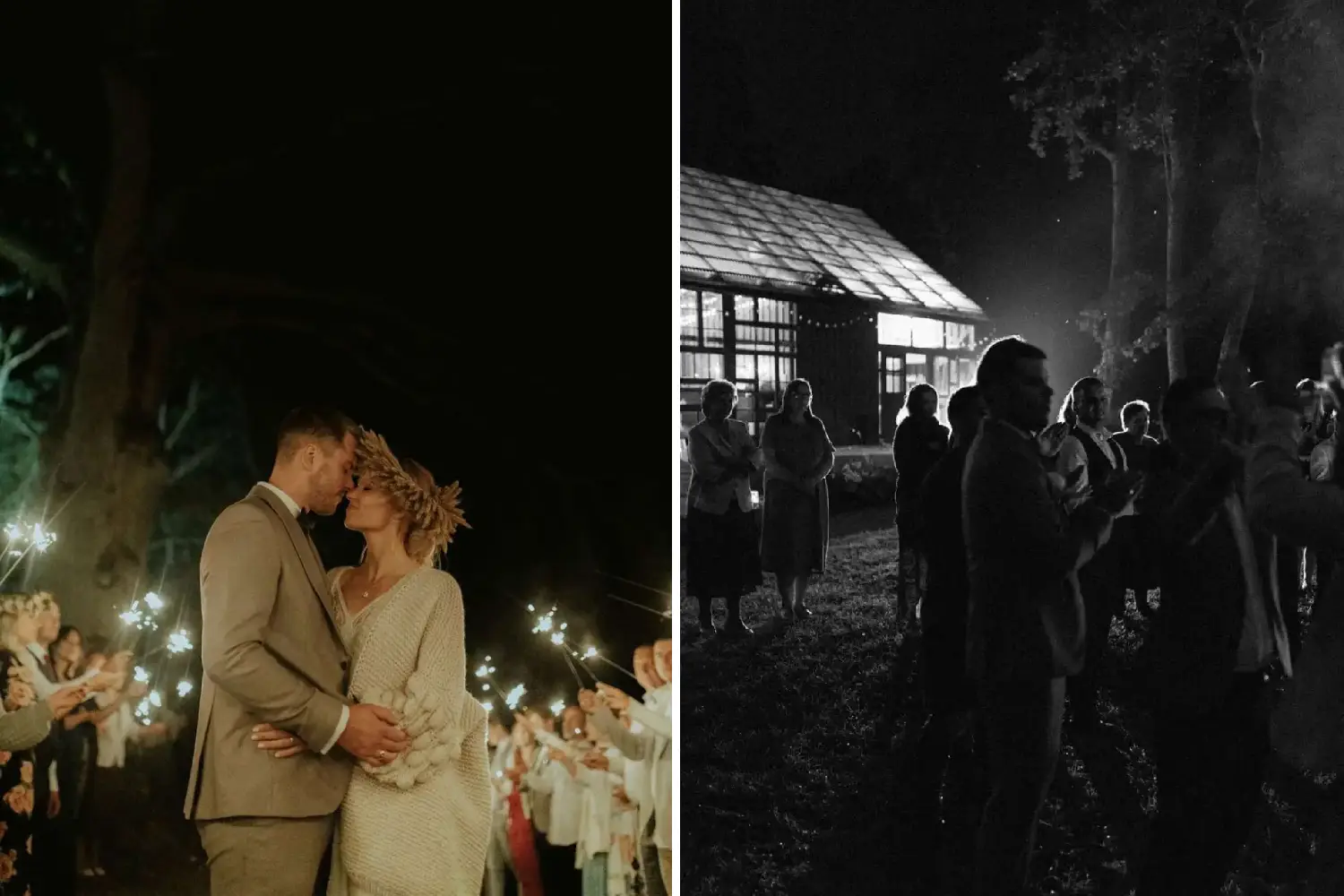
Light ceremony – the bride and groom light a common candle or lantern, symbolically starting their common path. Parents or friends can give "their lights" as a favor. Michoshan is usually held in a strong natural place - by a river, an oak tree or in a grove of trees. In it, luminaries - torches, bonfires, candles - play an essential role. Miracle candles also look magical.
Exchange of flower crowns – not removal, but an exchange of symbolic wreaths or flowers where each crown represents a promise of the future.
Shared vows song or poetry – a creative duet where a couple or close friends perform their special vows song or poetry reading.
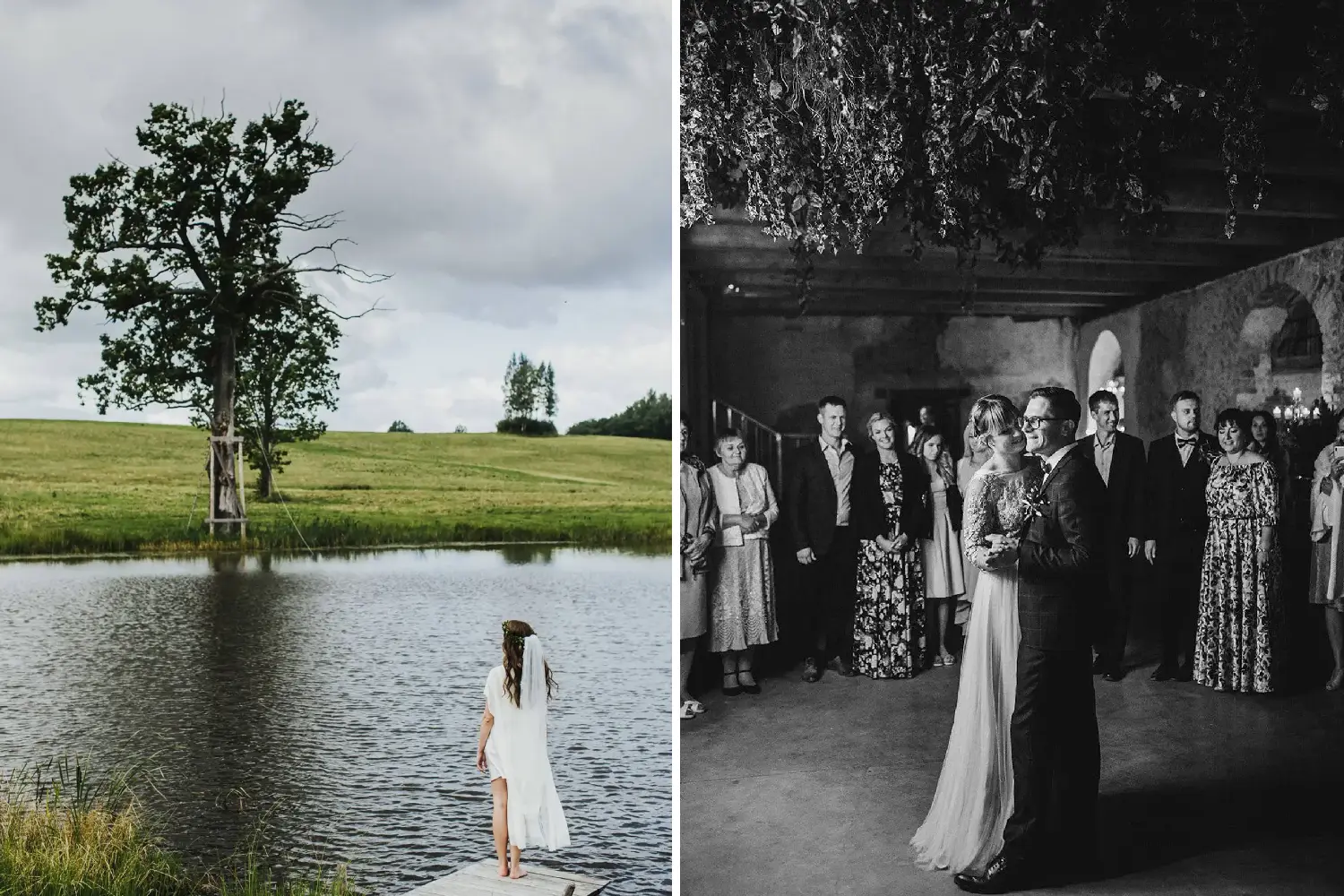
Photo: CLYDE LIELBSIS
Videos from family and friends - pre-prepared wishes and life advice to show during the ceremony as a symbolic connection to the roots.
Creating a joint painting – abstract art or symbolic work that the couple creates together.
Ritual of passage with friends – friends symbolically "let" the couple through ribbons, gates or a wreath of flowers to the new stage of life.
Wedding capsule – the couple and their guests put symbolic things or messages in the capsule, which will be opened on the tenth anniversary of the wedding.
Fire affirmation – the couple throws a chosen symbol from their old life (for example, an ornament, a wreath of flowers) into the fire, starting the new stage.
Fire Ritual – the couple lights a symbolic fire together or lights candles around a circle that symbolizes their new life. A short speech or poem read by friends or family members can be added.
Photo: CLYDE LIELBSIS
Reading a couple's vows at midnight – a couple reads each other promises or wishes for the future in a quiet moment. It can be done by candlelight or in a specially decorated place.
Jointly planted tree in the couple's new home. The tree has a symbolic meaning - it is simultaneously connected with the sky, deities and soul and at the same time - life force, grounding, solidity, blessing of the family, knowledge left by the ancestors, roots that form a deep and secure solidity. Each tree has its own symbolic and energetic meaning. For example, oak, linden and apple trees are energizing trees. Oak is a symbol of strength, which provides masculine and positive energy, attracts blessings and helps to realize goals. Linden is a symbol of femininity and life, it has a calming energy that attracts love and tenderness. The apple tree is also associated with love and fertility, as well as motherhood.
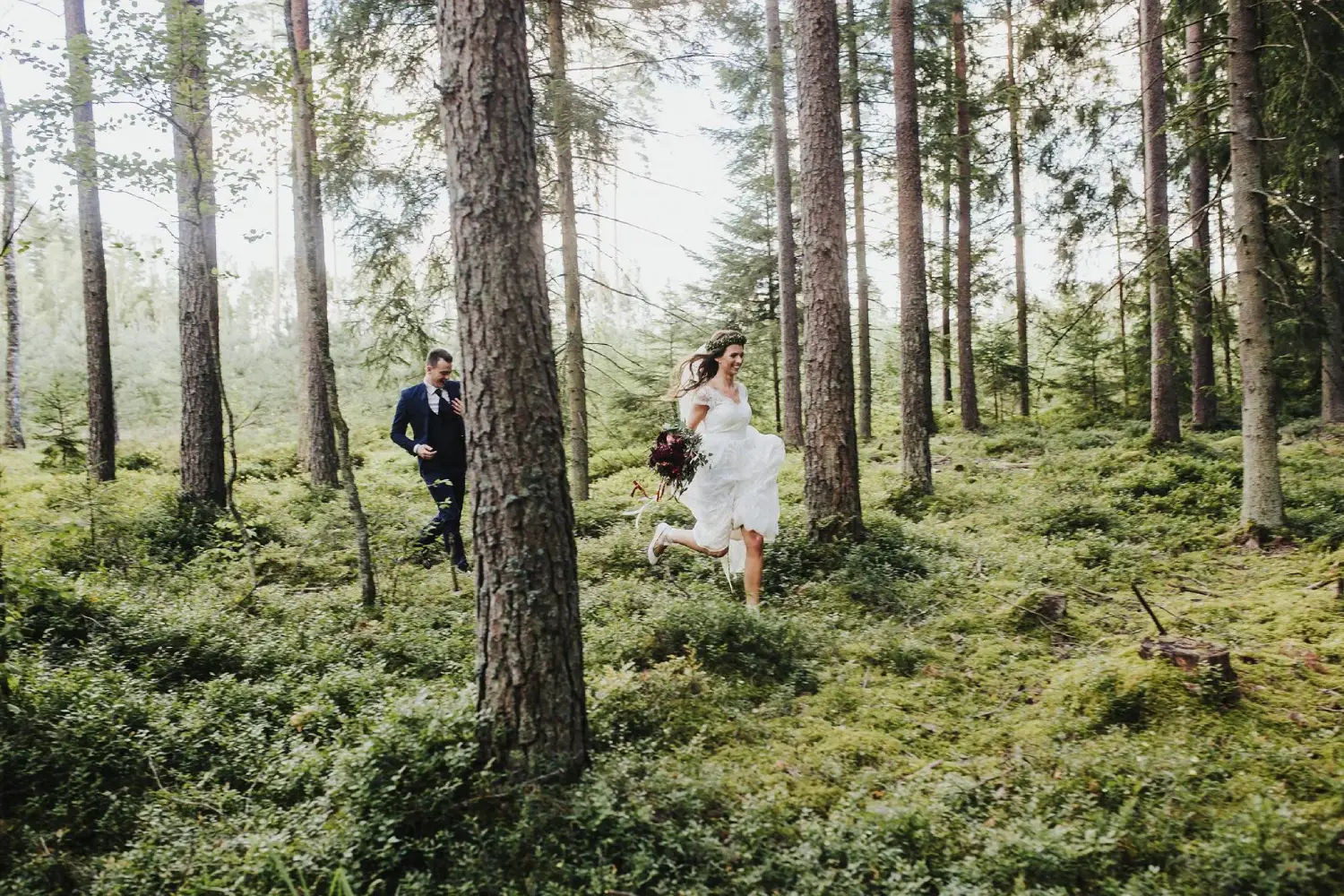
Photo: BILLIJS LOTS / www.billijs.lv
Circle ritual – wedding guests form a circle around the couple, each expressing a blessing or a wish.
Exchange of crystals – each guest indulges in intuition and chooses one of the natural crystals from a common dish. It is given to the couple by making a wish.
Gongs and Sounding Bowls - Sounding bowls, gongs or bells are used during the ceremony to create a peaceful, spiritual atmosphere.
Incense of plants or herbs – uses incense of sage, palo santo or other plants to symbolically purify the couple and space.
Manifestation writing – the couple writes their intentions or dreams in lifestyle, and they are read or symbolically placed in the family "treasure chest".
Time for two – if the wedding day is intense and during it there is no planned private moment for two, which is often realized during first look , then the alternative time of mixing time will be right for the two of you. For this purpose, a special area can be arranged, decorated with lamps, candles, warm blankets and other attributes that will create a romantic and cozy atmosphere, so that you can indulge in a leisurely moment with each other. It is good to think about how to deal with the presence of the photographer and the videographer - whether you will allow a few photos together in a beautifully decorated and special place before staying only in each other's presence, or not.
Photo: BILLIJS LOTS / www.billijs.lv
Michošana held in Latvian traditions or unique rituals - whatever you choose will give a strong symbolism to the wedding day and the new phase of life. How to do it is a private choice of the couple. What matters is what feelings and meaning you give to these rituals.
This website uses cookies to improve the user experience and optimize its performance. By continuing to use this website, you agree to the use of cookies on this website.
Read more

 share
share