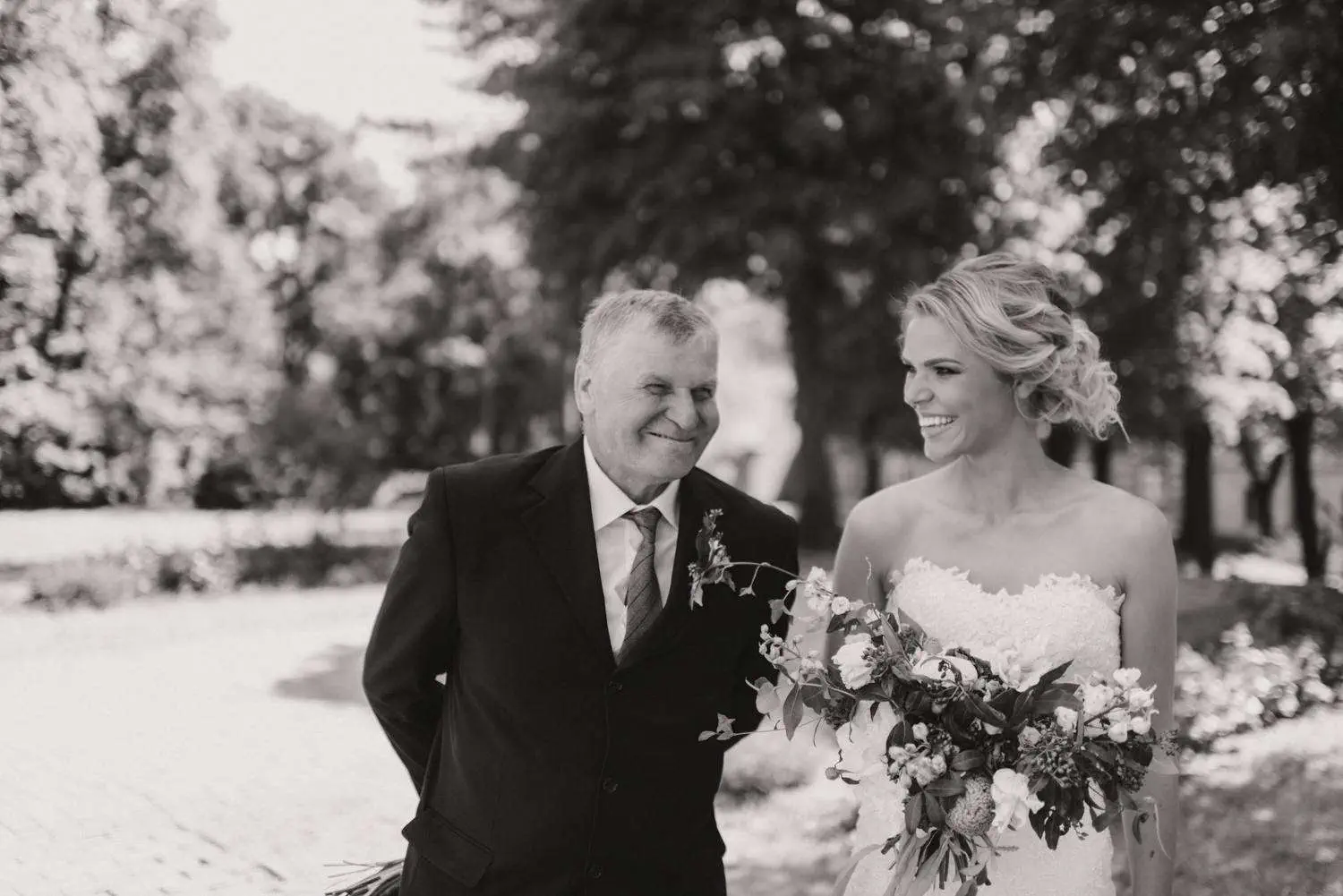
Although it is traditionally believed that the bride is led down the aisle by her father, this tradition is changing nowadays. It is the bride's special moment, and she herself can decide who will be the person she wants to see next to her. If the bride has a much closer relationship with her mother, or if for some reason the father is not in the bride's life, then the mother can be the person to accompany her to the altar.
During her life, mom is by her side in so many different ways during her daughter's life, so she will undoubtedly be honored to accompany her daughter to the altar and hand her over to the caring hands of the groom.
On the other hand, if the bride is lucky to have a strong family and loving parents who have been an excellent example for her on how to build relationships, then why not go to the altar with both parents by her side? Such a tradition can be observed in the Jewish culture, where the father of the bride leads his daughter to the altar, standing on the right side, and the mother of the bride - on the left.
If the bride grew up in a separated family model, but maintains an equally close relationship with both her father and stepfather, then it will be an emotional moment if both fathers lead her to the altar. If the two men have a good relationship with each other, then there should be no problem and they will definitely agree, but the bride will be able to enjoy the moment of walking down the aisle, feeling safe and protected.
Maldīgs ir uzskats, ka līgavu pie altāra jāved tikai vecākiem. Many brides choose to be escorted by other close family members, such as an uncle, aunt, brother, sister, cousin, best friend or girlfriend. Going to the altar symbolizes not only the new stage that is still ahead, but also everything that has been experienced so far and the challenges, difficulties that have been overcome, so the bride may want to go this way with the person who has been with her the most.
Whoever it is that you ask to lead you to the altar, he will surely be especially proud and honored by such an opportunity.
Pat. ja līgavas dzīvē ir burvīgi cilvēki un lieliski vecāki, daudzas izvēlas iet pie altāra vienas pašas. It is also a beautiful tradition, because the bride is able to fully enjoy the moment and follow the gaze of her beloved to meet him very soon. If, however, the line (for example, in large traditional churches) is too long, then you can take the example of Meghan Markle, who was met halfway by her fiancé Prince Harry's father, Prince Charles, to continue walking together.
Arī tā ir tradīcija, kas iesakņojas arvien biežāk, kad līgavu pie altāra ved nevis līgavas tēvs, bet gan līgavaiņa.
Another way for a bride to walk down the aisle, which has gained more and more popularity in recent years, is with her family pet - a pet. Daudziem pāriem, piemēram, suņi kļūst par ģimenes locekļiem, un kādēļ gan neiesaistīt arī tos kāzu ceremonijas norisē? Of course, in this case, you should always think about the well-being of the animal itself - will it feel comfortable, will it not be too hot, will there not be too many people, will there be someone who will take care of the family pet afterwards, etc.
If, however, you are sure about the behavior of your family pet, then go ahead, it will only make the wedding ceremony more exciting and interesting.
Drosmīgās līgavas, kas nebaidās atšķirties, savā kāzu ceremonijā var ne tikai ienākt, bet arī iedejot vai iedziedāt. Ja līgava, piemēram, dzied un spēlē ģitāru, tad viņa pie altāra var doties ar ģitāru rokās, izdziedot abu mīļāko dziesmu. Tas var kalpot kā pārsteigums un veltījums līgavainim, kas kāzu ceremonijai piešķirs vēl papildus emocionalitāti un noskaņu.