Wedding celebrations are unimaginable without solemn speeches, congratulations and toasts. Let us recall some principles of modern etiquette so that your toast is appropriate and elegant.
Wedding toast - congratulations and good wishes
A toast is a short congratulatory address usually given at parties and formal events such as weddings. Speaking of wedding toasts, it can be a very short heartfelt toast or an original address that also includes a small story about the newlyweds. How long and what the toast will be depends on how close you are to the couple and how big the wedding is. Smaller weddings have more time for longer speeches and personal toasts, but larger weddings will have more toasters, so stick to a shorter format. In any case, the main thing is to be guided by the situation and atmosphere in order to understand when and what kind of toast to say. The toast should be sincere, complimentary and polite.
.webp)
You can stick to the following scheme - introduce yourself, telling about your relationship with the new couple, thank them for the beautiful ceremony and tell a nice story about the couple, ending it with good wishes for their future life together. You can prepare for the toast in advance and write down the main thing on a small piece of paper, which you can look at during your speech, but in no case should you read the toast from the phone.
Another idea - if you think of a beautiful toast, you can write it on a greeting card and after the toast is called at some point during the celebration, add the card back to your gift. In this way, your well-thought-out toast will remain with the newlyweds in written form, besides, you will have the beautifully designed congratulation in your hands during the toasting.
It is worth remembering that even if you know one of the couple better, on the wedding day you should congratulate the couple together, not just one of the newlyweds. In the social part of the celebration, there is usually a relaxed atmosphere and guests often try to include a joke in their speeches. However, you should be careful with this, it is better to be polite and sincere than to try to joke. You don't have to try to be a joker or a comedian - awkward and clumsy jokes, as well as inside jokes that only you and the couple understand, will not fit into the celebration. The toast must be understandable to everyone. Also, to promote cohesion among the guests, you can also refer to the congratulations expressed by others in the toast, for example, say that you liked the toast of another guest and join in his good wishes.
.webp)
Wedding toast etiquette
Toasts are most often given during dinner, but if cocktails are planned before dinner, then they can be said during the cocktail hour before dinner. The sooner the toasts are made during the evening, the better - the toasters will get over this task faster and get rid of their anxiety, while the other guests will still be attentive enough at the beginning of the evening and listen to the toasts. In addition, toasts are a good way to initiate communication between guests and create a cohesive atmosphere.
The first toast before the meal is usually given by the father of the bride, the groom himself, the best man, the leader of the evening or another relative of the new couple. It is a gesture of welcoming guests, in which guests are told about their arrival, wish a good appetite and a pleasant evening, as well as congratulate the newlyweds. During the first meal, toasts are given by parents, ushers and those closest to them, but other guests who wish to do so usually toast during dessert. If you want to make a toast and draw attention to yourself - never clink a glass with cutlery. Instead, stand up with a glass in your hands to draw attention, but you can put the glass down while you speak to keep your hands free and not get in the way if you're not a confident speaker.
.webp)
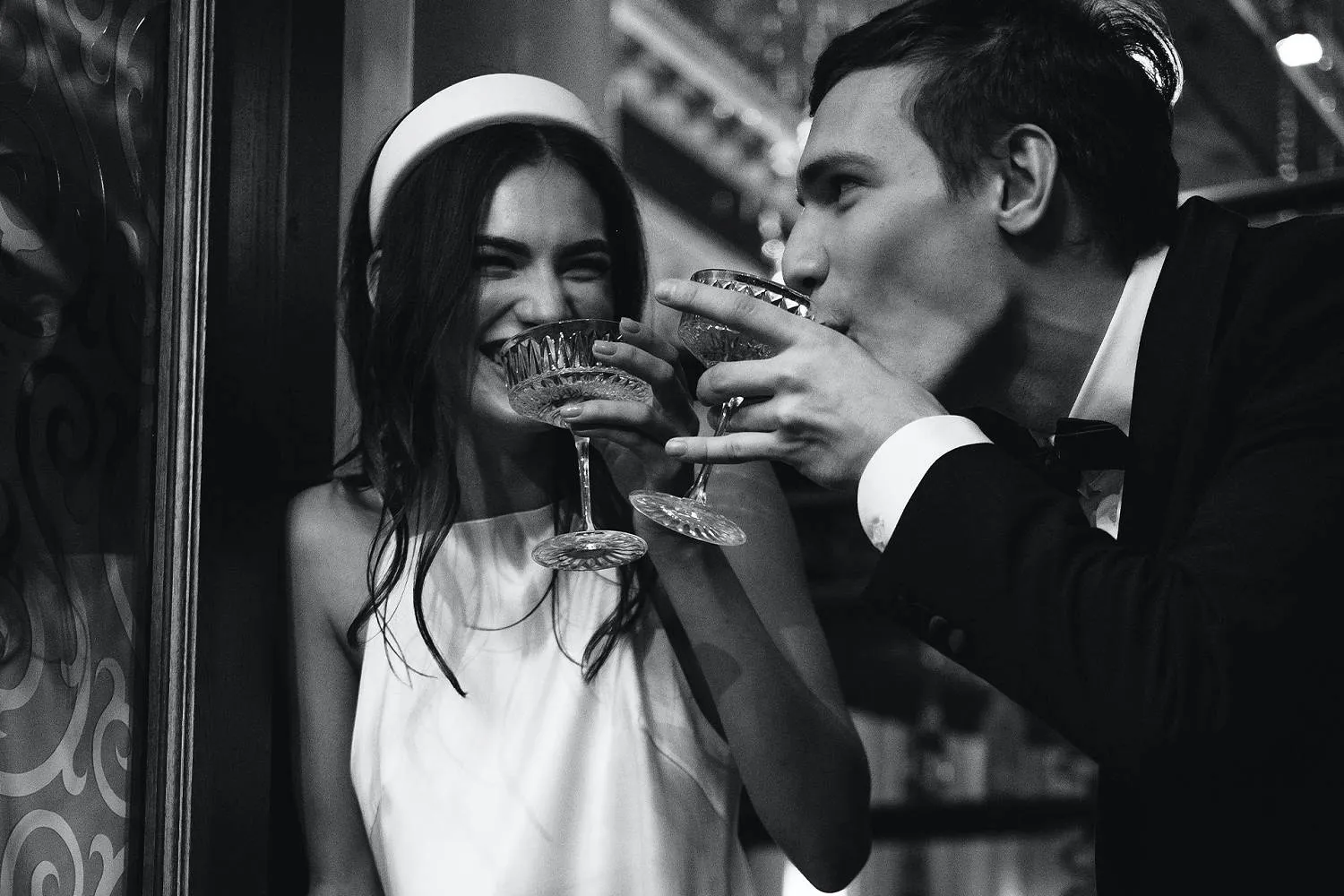
In order to avoid awkward situations and not delay the evening plan, it is always worth finding out when the toasts are supposed to be made. It can also be done in such a way that the host of the evening announces those who want to make a toast at suitable moments. The toast is basically nothing complicated - the toast maker stands up, says his congratulatory speech, at the end of which he raises his glasses together with the other guests. A reminder to the newlyweds about toast etiquette - when one of the guests calls a toast and the other guests raise their glasses, only the recipients of the toast, who are the new couple, do not raise their glasses.
.webp)
After receiving the toast, they will talk about the toast and only then sip the drink themselves. Usually, the recipients of the toast do not raise their glasses with the others, otherwise it turns out that they are congratulating themselves. Instead, after receiving the toast, say congratulations by raising the glass. Another nuance associated with toasts is the clinking of glasses.
Etiquette experts disagree on whether this should be done. It is an old tradition, which has several explanations, one of them is that evil spirits are scared away by chanting. However, it must be remembered that in the past, sturdy glasses were clinked, so nowadays clinking is not always wise, especially if the wedding is held in a fine restaurant with expensive and fragile glass glasses. In addition, glasses are usually clinked in a smaller group of people and it is not necessary to do this in large celebrations. If, however, the glasses are clinked, then it is enough to do it with the people sitting next to you, there is no need to lean over the table to clink with the guests sitting further away. When clinking, you should not clink the upper part of the glass, which is fragile, try to do it with the widest part of the glass.
Similarly, in Europe it is accepted that when clinking glasses, you must look into the eyes.
Before making a toast, you should make sure that everyone has refilled their glasses. However, it does not necessarily have to be an alcoholic drink, it is acceptable to raise a glass with any other drink. Likewise, you don't have to drink half a glass with each toast, you can have just a small sip.
.webp)
What to say in a wedding toast
The bride's father, who traditionally makes the first toast, will tell the guests about the arrival and the groom's parents about their help in organizing the wedding. In his toast, the groom will tell the bridesmaids, ushers, all participants, as well as his and the bride's parents. The groom can present flowers or gifts to the mothers and those closest to them with the toast.
The host will tell the groom and if the groom does not do it himself, then the host can thank the other participants instead of the groom. Usually, the main toast-speakers at the beginning of the evening prepare in advance and agree on them, so the thanks can be divided - the groom will say it to his parents, and the best man will say it to the others. It is usually expected that the host's speech and toast will not be so formal, there will be a joke in his speech and his toast will start the informal part of the evening.
.webp)
The other toasters, congratulating the new couple, can tell a personal story, say warm words, wish for a happy marriage and so on. Often, in wedding congratulations and activities, references to the expected growth of the family are included in various ways, but nowadays various incentives for the creation of offspring are considered a very personal and even sensitive topic, therefore, before wishing a big family and expanding your speech about children, you should think, because every couple has their own views and plans in this regard. They will certainly make these decisions themselves, even without prompting from guests.
.webp)
Finally, when making a toast, remember - the simpler, more understandable and shorter, the better.
Think carefully about what you will say so as not to stray from the topic and think of a beautiful final accent so that everyone understands that the toast is over and it's time to raise the glasses.
Author of the article: Renate Berga

 share
share