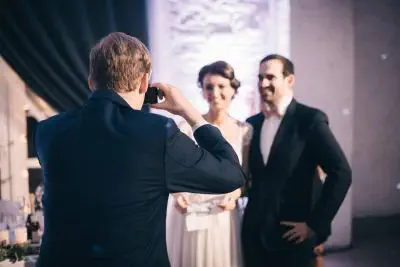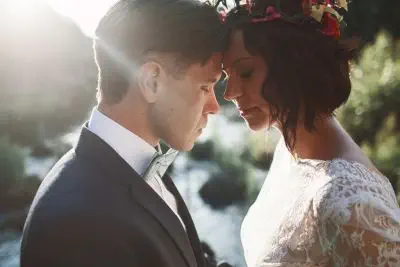
In ancient Latvian traditions, weddings were called weddings . More often they got married in the fall, when the big works were finished and the crops were harvested. Michoshana is one of the wedding rituals. A magical moment that symbolizes the union of two destinies on a common life path, a promise of trust and love to each other, transition to the status of wife and husband. Nowadays, the mixing ritual is often modified for creative elements, supplemented with modern ones or replaced with Night Magic – a magical moment for two. This time we take a look at the traditions of Latvian michos!
Interesting facts about mixing
Michošana is also called by more forgotten words - capping and talking.
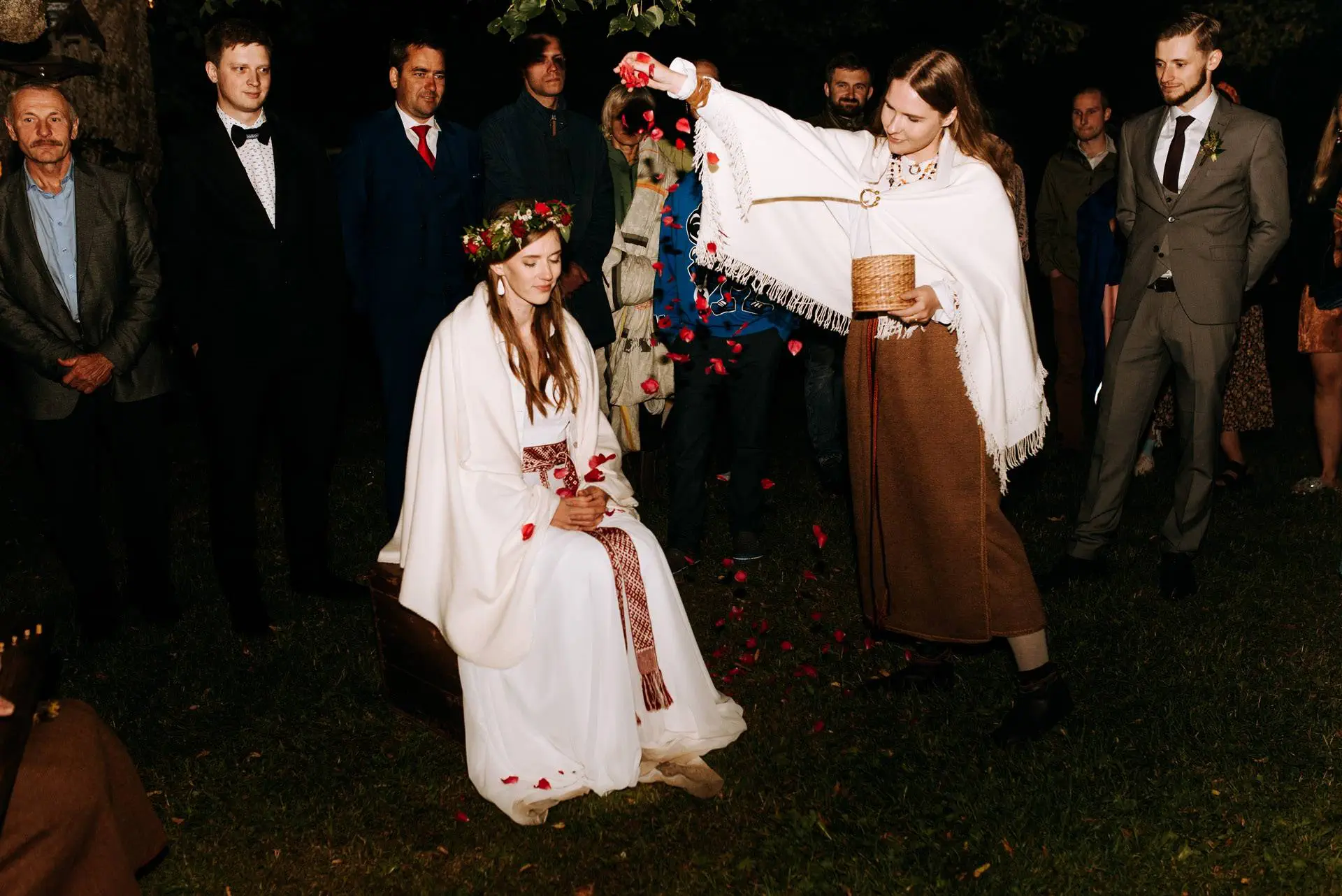
Although two people are getting married, in the former michosana traditions, more attention was paid to the bride - the new wife and her initiation into a new round.
Photo: INGA VÍņAUDE
The time of holding the parade has changed. Modern wedding planners recommend organizing the ceremony no later than 11 p.m., because the process is really a magical ritual that requires the attention of guests. If it is organized too late, the guests are already tired and cannot fully concentrate on what is happening. For quite a long time, it was customary to hold the mass at midnight. However, the ancient Latvians did not wait for midnight, they held the michoshan earlier - early next morning, farm and barn work was already waiting.
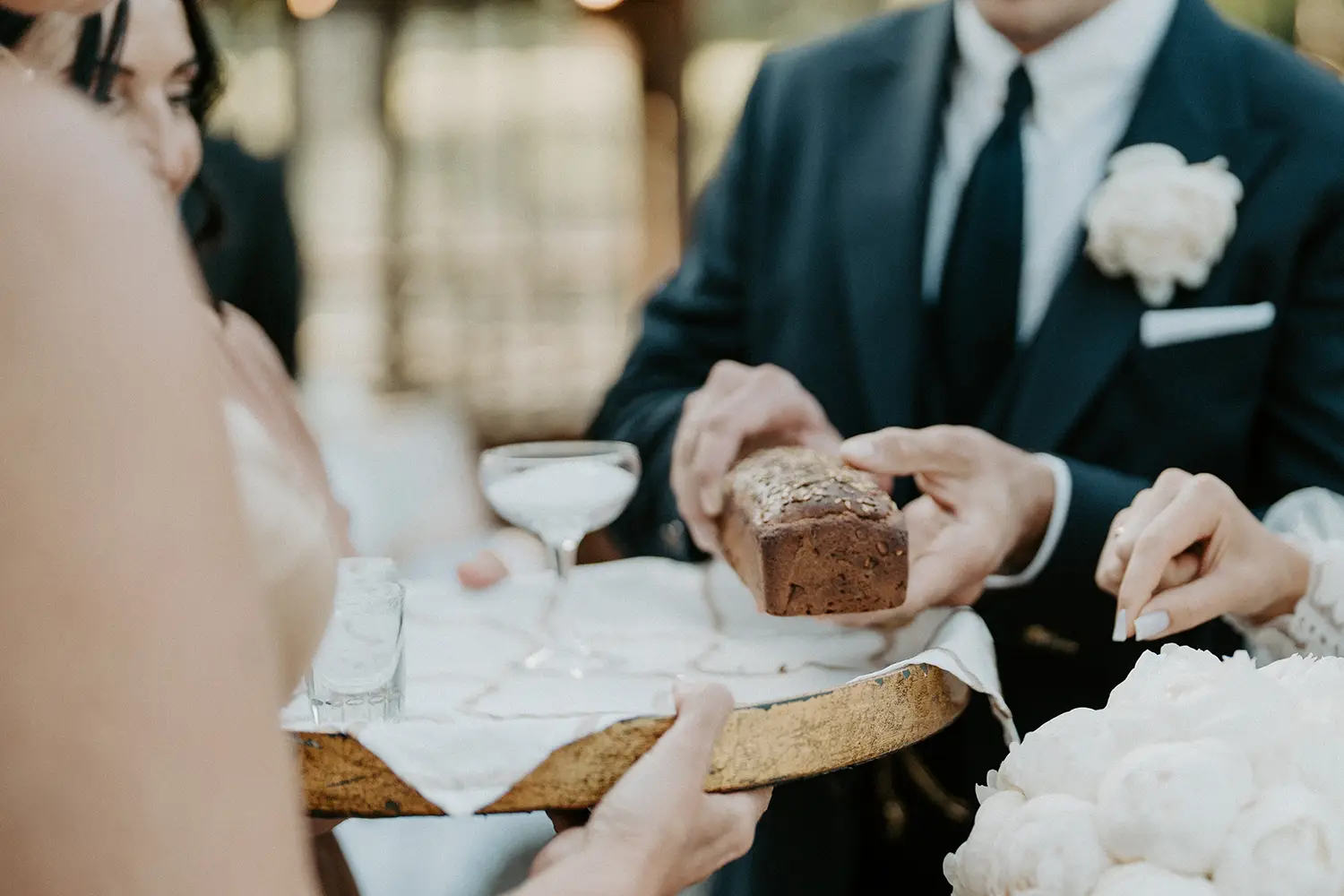
The tradition of a wedding cake served after the ceremony (unless you have chosen to serve the first treat to the guests immediately after the ceremony) has evolved from the tradition of the toasting bread. The bride baked the bread together with her mother.
You must have heard the term “ achievers ”. They are relatives of the bride who tried to catch up and take away the bride from the ushers. You can get the bride back only if the betrothal has not been done yet and the bride has not been appointed as a wife.
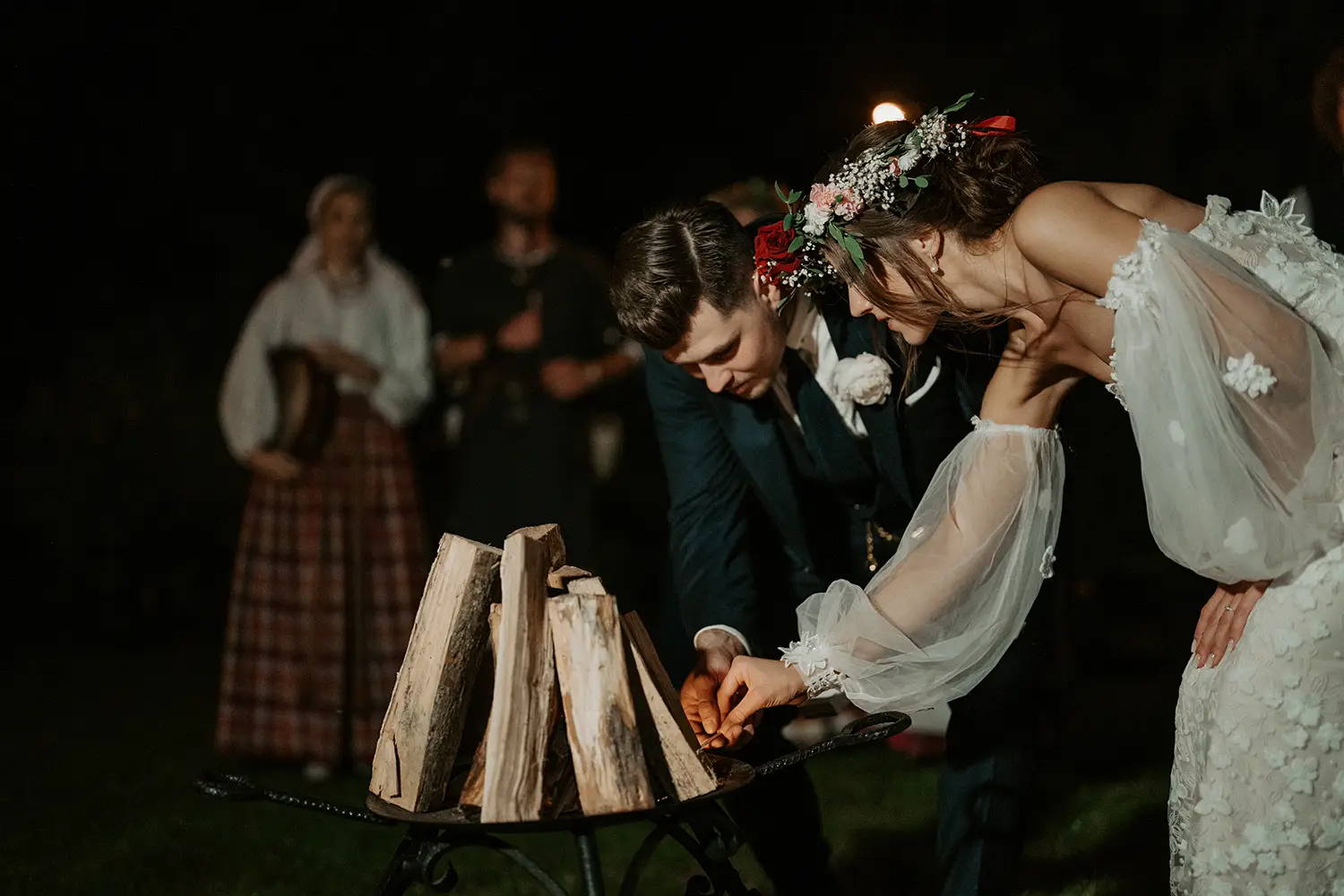
Nowadays, it is preferred to perform michosing with candles and lamps in decorated outdoor spaces, but earlier the ritual was held in a room or a barn, where the newlyweds were then taken to bed.
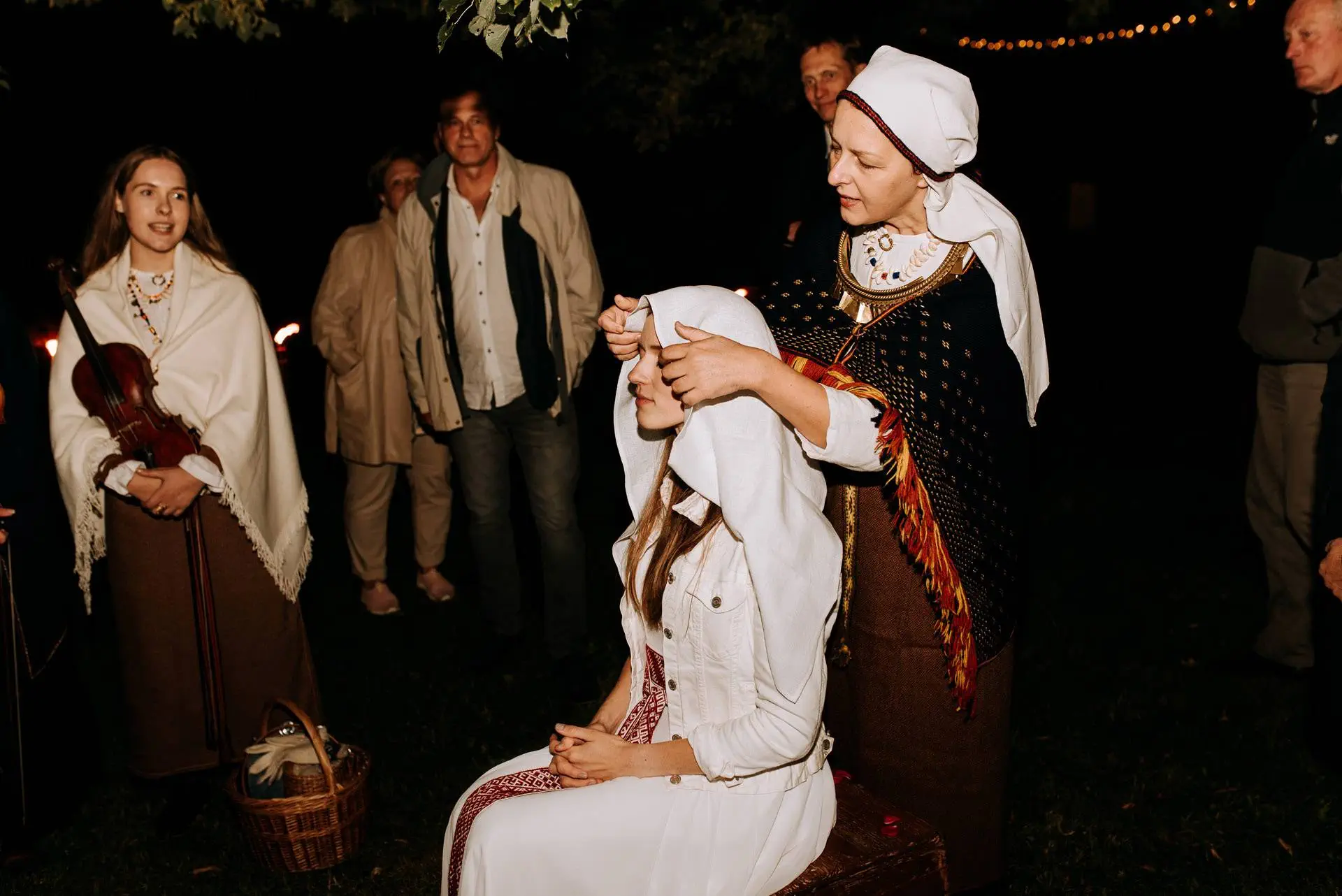
When mixing the new couple, they are seated on a bench covered with a blanket or scarf and decorated with flowers. The bride's crown is exchanged for the wife's aubi. Here the element of play comes in - initially the bridesmaid puts her old aubi on the bride's head, but the unmarried daughters gathered around sing to the bride to take off the old aubi and put back the crown. The bridegroom is put on his head and given a pipe.
Photo: INGA VÍņAUDE
The young wife hands over her crown and the husband the groom's hat to the young people. In another version, it is not a hat, but a horn that is blown to announce that the young man is ready to take a wife. This tradition is similar to throwing the bride's bouquet , because the next owners of the crown and hat are expected to marry soon.
The bride's crown was a great treasure and the bride carefully chose whom to give it to. Due to its value, more often than not, the bride wanted to keep it in her family.
When the attributes of the new couple are exchanged for the symbols of the spouses, the young boys and girls cry, but the married people gather around the couple.
The most popular dance song – Ligodam river carried.
This website uses cookies to improve the user experience and optimize its performance. By continuing to use this website, you agree to the use of cookies on this website.
Read more