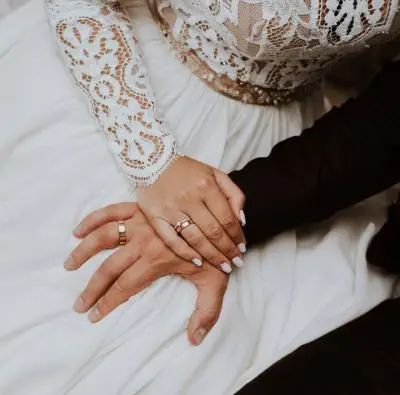
Why do we fall in love with this particular person and not someone else? It's not just a series of coincidences or romantic chemistry - behind our choices lies a complex psychological mechanism involving childhood experiences, emotional trauma and unconscious levels of consciousness. Undoubtedly, we follow the heart, but the heart tends to be guided by considerations of the mind, psychological reasons, and the plan of the soul.
Childhood experiences and attachment patterns
Our ideas about what love, intimacy and trust are formed in childhood. After all, what we see and experience is what the world around us shows us. We believe in this world as reality. If parents were emotionally available, supportive, and consistent in their treatment of us, we are more likely to develop a secure attachment style. This means that even in adulthood we look for partners with whom we feel safe and who can support us emotionally. Together with such a partner, a partnership is really formed in which both are equal - each with their own choices, their own tasks, but both are respectful and gentle towards each other. It is a relationship where partners build each other up and a space to grow and develop.
If a lack of true love, support and emotional presence, neglect or even violence is experienced in childhood, an insecure attachment develops, which makes it difficult to choose an adequate partner in adulthood. In this case, choosing a partner is often based not on what's healthy, but on what's familiar—even if that means returning to a destructive relationship dynamic. Thus, even after breaking up with a toxic partner, a person who is not familiar with a healthy relationship repeatedly meets and lets a partner into his life, with whom he experiences the same unpleasant patterns that he experienced in the previous relationship - for example, emotional abuse, cheating or controlling.
Our emotional traumas, especially those that are not conscious, often become a hidden compass in choosing partners. If someone lacked the emotional presence of their parents as a child, in adulthood they may choose a partner who is withdrawn or emotionally unavailable. Such relationships often end in disappointment and unfulfilled expectations because they are based on old wounds rather than a healthy connection. The emotional environment we grow up in also determines what we perceive as 'normal'. If there was a lot of chaos in your childhood, then as an adult, relationships without drama can seem boring - instead of healthy.
In order to change this cycle, it is necessary to recognize the traumas and work with them. This is the only way to get rid of the subconscious attraction to relationships that do more harm than good. In addition, by working with ourselves and getting to know the mechanisms by which we operate, we will already "smell" the potential partner with the harmful way of expression. During healing, you may have to "fall into" toxic relationships even when you already seem to know yourself and your patterns. It's nothing. It's a process. Later, you simply won't start a relationship with people who are not worthy of your respect.
Psychologically (in a healthy way) we strive for balance, security and peace, and our emotional intelligence - the ability to recognize, name and manage our emotions - strongly influences the choice of a partner and the quality of relationships. People with high emotional intelligence are more likely to choose healthy relationships because they are aware of their needs and boundaries.
There is an opinion that the chemistry of falling in love happens precisely with those candidates with whom there is a possibility of a traumatic relationship, instead of a healthy coexistence. Behind the feelings of falling in love are hidden complex chemical processes in which dopamine, serotonin, testosterone and other hormones play the main role. The initial phase of falling in love often lasts from a few weeks to about a year. During this time, people often lose their appetite, feel euphoric, or even become a little obsessed with the object of their crush - all thanks to brain chemistry. These processes happen subconsciously, quickly and most often outside of our conscious control.
However, it is important to understand: chemistry is not always a reliable indicator of relationship quality. It can be very intense with people who are not emotionally suited to a long-term relationship. Over-reliance on 'chemistry' can lead to painful disappointment. If you are looking for a partner consciously, then you are more likely to create a loving, respectful long-term relationship with a partner with whom you feel at peace. If you do decide to build a relationship with a person you are deeply in love with, a smart approach is to perceive chemistry as the initial spark, but continue to evaluate compatibility and values - how conflicts are resolved, how much there is mutual respect and emotional harmony.
Sweet novels, exciting movies and passionate performances have planted the idea that love is painful, wild, full of passionate suffering, drop by drop. But this is not the truth and it does not serve the happiness of mankind. Love doesn't hurt. Love does not take away. It gives and complements. It is fruitful and enriching. Peaceful and safe. Love is a space where you can thrive. And just be. It is favorable.
Although emotional and subconscious factors play an important role, the consideration of the mind in choosing a partner cannot be denied. The mind evaluates compatibility, life goals, priorities, value systems and practical everyday life. A partner with whom you can grow together, share similar views and vision of life, turns out to be more suitable in the long run than an emotionally intense one. Compatibility in lifestyle, attitude to money, parenting, spiritual beliefs are all part of mind considerations in a relationship. The ability to resolve conflicts sensibly, clarify ambiguities and agree on common goals is very important.
Logical choice does not mean "cold calculation", but rather the ability to assess real conditions, assess one's emotional comfort and make balanced decisions that serve both the heart and the mind. And this approach to choosing a partner is absolutely not bad. It is even very beneficial. In the end, we fall in love with those whose qualities we respect, but a love that begins with great passion and passion can just as quickly become sour or simply fade away due to chemical processes.
The choice of our partner is multi-layered - it is rooted not only in falling in love or attraction, but also in human psychology, past experiences and the depths of the soul. We seek not only a lover, but a partner, a mirror image of our desires and shadows, and a healer as well, whether we realize it or not.
The next time you get that "he/she's the one" feeling in your heart, stop for a moment. Ask yourself - does this person come from the shadows of your past, or from the possibilities of the future?
It is believed that our souls, before coming to Earth, already choose the most important factors that will materialize in our lives, including romantic partners. It's not for nothing that the term "soul mate" is so coveted by anyone looking for love. It is not just a similarity of values or interests and a half-hearted understanding. It is a deep connection that, once you experience it, you don't want anything less.
It is believed that soul mates destined to meet will meet. And miracles happen - unusual coincidences, similarities in the experiences of families and clans, places crossed at the same time, even without suspecting that he or she is nearby and you have had countless opportunities to meet. Feelings that cannot be confused with any other. Knowledge.
This website uses cookies to improve the user experience and optimize its performance. By continuing to use this website, you agree to the use of cookies on this website.
Read more

 share
share