When starting a relationship, one of the strongest mutual desires is to be honest with each other. No defaults, cats in the bag and skeletons in the closet.
Already at the first meeting, you want to tell the other person more than "necessary" - to lay out all your cards and bare your soul. So that you don't have to spend a long time feeling out the other person's personality, if it suddenly turns out that some of the details of the partner's past or current life are unacceptable: divorce , criminal record, children, chronic illness or religious beliefs. Especially at the age of thirty, when hazy stories with unclear rules and open endings are no longer of much interest - if you don't already have a unified vision of life at the start, then why start at all?
This is also where the disarming openness of the first conversations arises - look, here I was injured, here I have a burn, but here is a deep cut scar that occasionally opens and bleeds, and then I tend to lock myself in for several days, frown and want not to be touched.

If we are not afraid of what a potential partner has discovered, the relationship moves to a new level. Each month we witness each other's actions that reveal both the beautiful and the crooked in each of us. And in each particular case, we decide whether to develop the relationship further or whether this is the point at which to turn around and walk away.
It is absolutely normal if after some time we realize that we made a mistake and the connection should be ended. Unless you suffer from a chronic inability to stay in a relationship, there's no need to eat your way through sour cream. By chronic inability to stay in a relationship, I mean the habit of running away from it at the first sign of trouble.
The smallest problem, a hint of conflict, a carelessly raised eyebrow or wrong intonation and that's it, legs over shoulder. You run away without giving the other a chance to explain anything. In such a vision of the world, love must be absolutely problem-free and the partner must be understanding and accepting of everything. Because this is exactly what the myth of "perfect" love teaches us. But you know what's wrong with such expectations? There is no partner in them. There is only you in them.

It is normal to want to be comfortable and pleasant in a relationship, especially if it has been sad and difficult before. However, expecting a perfect and one hundred percent hit on your wishes from your partner means expecting the impossible from him. Even if he himself would gladly change for you, he won't wake up the next day as a different person, he won't change at the touch of a button, even if he asked and if he really wanted to.
And that is one of the most difficult tasks of adaptation in a relationship – to remove the veil from the eyes in order to look at the person next to you without the prism of fear, idealization and expectations and see that he is different. To see it now, and not in a few years when it "suddenly" turns out to be an unpleasant surprise.
Yes, your partner is different, for example, because he is of a different gender. Because he grew up in another family. Because there were other people around him. It's normal that the person you fall in love with reads other books (or doesn't read them at all), laughs at different jokes, doesn't like to hold hands or talk a lot. However, if this person is important to you, then these differences should also be treated with respect, without trying to remake the other to your liking.

Love - it is not about the perfect coincidence of contours. On the contrary, it is about growth and creative stepping outside the lines.
There are some recommendations that will help you not to hurt yourself and your partner with differences:
- Don't think that your partner will understand by your facial expression or loud silence that he is doing something you don't like and that he has to stop it and do it differently. No one knows how to read minds and they don't need to. If something has caught your eye, it is better to say it gently and tactfully than to accumulate internal irritations and resentments.
- Don't belittle the other person's important acknowledgments of attention that make them feel loved. If a woman feels loved when she receives flowers, don't throw her in the face: "Are you serious? Flowers are the most stupid gift, it's just money thrown in the wind!" On the contrary, notice what the other person likes, what they radiate from, and try to express your love to your partner through these affirmations. In addition, also share what makes you the most happy: "I love how you cook dinner!"
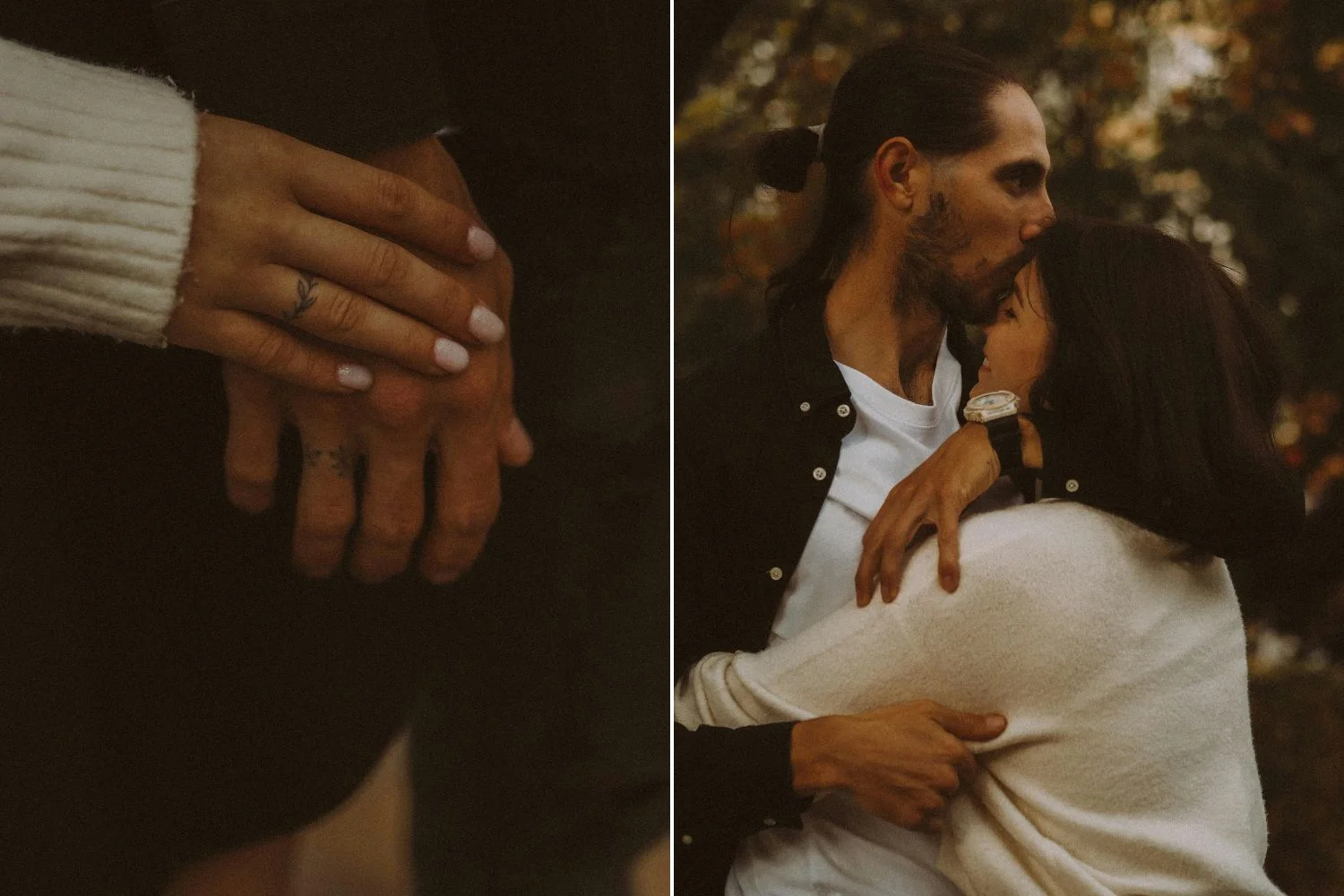
- Do not compare your partner with your exes, especially out loud. "Karlis never did that" or "Linda was a goddess in the kitchen". Not only is it painful and unpleasant, but it also makes you feel like there are not two of you in the relationship, but three. And the third is like an uninvited guest who cannot go and drink tea in the kitchen, although it is long past midnight.
- You should not speak disparagingly of those who appeared in your partner's life much earlier than you, and of those who appeared in his life even before you. You may not like all this, but you don't necessarily have to tell your partner. Give yourself a chance to better understand his choices. Try to dig deeper and find out why this friendship is so important to your partner, why he is passionate about this occupation or this hobby - this can tell a lot about his essential needs (and will give food for thought).
When you are young, it seems that a normal relationship is when you both want the same thing, think about the same thing, treat everything the same and even the cockroaches in your head are from the same kennel. But then it turns out that it doesn't work - you meet a person with whom you are very good, but he is not you. And never will be. He will be around, but he won't be the same. And it's terribly uncomfortable.

In fact, any effort to change a partner is a strategic step to improve your own life.
I will underline - not the partner's life, but my own. Because if we add a little here and take a little off here, we will get a very comfortable copy for a comfortable lifestyle. With whom to celebrate holidays, to go on trips and to visit mom in the garden. But it seems to be more like violence than love.
Each of us chooses and sticks to those ideas that are comfortable to live with at that particular moment (everything can change after that). Figuratively, it can be imagined as choosing a blanket on a cool evening - one covers himself with a blanket, another with a woolen blanket, the third puts on his mother's jacket, while the fourth declares that all these blankets are an illusion and freeze in principle. Being offended that the person did not choose the same blanket as you is a waste of time. If he is warm under it - very good. As long as he does not try to push you and your vision of the world under his blanket - let him cover himself with whatever he wants.
After all, you have your own experience, your own head on your shoulders, and your own value system that you can use to stay true to yourself. The world is multi-layered, diverse and unpredictable, but it can and should be interacted with, and for this it is not necessary to break yourself or someone else. Break the system, the patterns, the beliefs, the habitual patterns of behavior and response - but not each other.
Each of us has been living with ourselves for not the first year and we are used to ourselves. It hurts us when someone pokes and demands immediate change. No one likes the phrases "lose weight", "read a book", "earn more", "become more feminine", "become softer". "be quieter", "inspire me". All of us hate hearing about where we don't measure up to some norm in another person's head or to the mythical "it's generally accepted". It creates protest, resistance, rebellion, alienation. Even if they tell us something worth listening to, we will still shut down and pretend we don't understand what they want from us - on principle. This is how we defend our fullness and the right to make decisions about our lives on an ongoing basis.

Whether or not you need to change for the sake of the relationship - everyone decides for themselves, because it is a matter of personal choice and taking responsibility for the consequences.
Not wanting to change is normal. Especially with older age when it becomes more and more difficult to be flexible.
There is an ambiguous psychological advice - if you cannot change the situation, change your attitude towards it. It does not work in matters of relationship well-being. Don't try to convince yourself that the irritating features of your partner that you would like to change aren't actually annoying. Denying your feelings will not lead to anything good. However, you can continue to live together - with your partner and with irritation, allowing yourself to feel and experience both sadness, anger and regret.
If you and your loved one share the most important values and needs, but the secondary ones differ, then look for ways to fulfill them in another way. I purposely did not decipher what the most important values and needs are, because they, just like the secondary ones, can be anything - it is a personal business of each person to place them in the most important priorities in their life.
For example, physical attractiveness – one's own and one's partner's – is a very important value for someone. He will suffer if the partner "gets away". For another, the time spent together and the impressions to share are much more important. The quality of life of such a person will decrease if the loved one refuses to go on joint trips, hikes and generally go somewhere together. There can be no categoricalness even in such a seemingly obvious issue as sexual trust - for some it is fundamentally important, while others are open to experiments and do not limit each other in any way.

However, this does not mean that one should try to understand and accept absolutely everything and any point of view of the partner, repeating the mantra: "It's acceptable to me, it's acceptable to me, it's acceptable to me that he thinks that way." No! Accept your reactions, survive them, but if the particular disagreement is not critically decisive for you, then move forward, gradually teaching yourself not to die inside every time you encounter another worldview.
Unless a person perceives every hint that something in himself should be changed or adjusted somewhere for the sake of relationships, as an attack on his freedom and walks with the flag of individuality and "complex character" raised, bravely protecting his cockroaches. Even those who are not compatible with the relationship by nature.
“I'm an artist and drugs (alcohol) are a necessity for inspiration (or to relax) and I don't care what you or anyone else thinks about it”; "I've been impulsive and jealous since childhood, but the fact that I hit dishes is simply my passionate nature"; "I will not pick up after myself - I have never held a rag in my hand in my life and I do not plan to, I was created for beauty."
In such cases, you can show your partner that it can be different, you can tell about alternatives. But to save, to persuade, to remake, to pray, to threaten, to blackmail and to engage in a transaction with an uncertain benefit - for what?

While we carry out endless repairs in someone else's house, we slowly begin to fall apart ourselves - the parquet dries out, the plaster falls off, the wallpaper peels off.
You can go to a family psychologist with the benevolent goal of saving the relationship, but if only one is rowing towards change, miracles will not happen. If the other is satisfied with everything and he doesn't want to change anything and won't, unfortunately, it's a one-way game.
If your partner refuses to compromise or change something (knowing that it hurts you), you always have the option of not putting up with it and leaving. Choose another relationship. Or, after all, choose yourself instead of agreeing to suffer pain. It's a bitter truth, but if love demands sacrifices, it will make sacrifices.

It's good that relationships are not slavery for life and leaving them (especially nowadays) is a familiar practice that is neither shameful nor condemnable. "Take what you have, otherwise it will be too late after that (no one will want you like that)" - this is the philosophy of the old days, from which the following also originated: "Nothing that bad, but at least your own" and "For the sake of the children, all for the sake of the children".
We have grown out of it. We have grown out of lifeguard games. From selection restrictions. From crowns of celibacy and other evil eyes. Of unions where one is right and the other is always, always a fool.
No one has to pay for the intransigence and dogmatism of others that hurt. The partner's choice is that and yours is that. The consequences are as follows. Just remember that there are relationships where you don't have to make yourself a shock absorber. And it's normal to want the best for yourself.
Author of the article: relationship mentor Zane Ozoliņa

 share
share