The iconic wedding outfit – the white dress, is actually not white at all. It comes in cream, champagne, ivory or other variations of white. However, pink, blue and red dresses are considered informal and rebellious. Historically, it turns out that the rebellious is exactly white. Up until Queen Victoria's wedding to Prince Albert in 1840, brides chose the most beautiful dress from their wardrobe in any color (even black) for their big day. Functional and reusable. This wedding was unconventional, it happened not for political reasons, but for love and
the choice of white color – a symbol of the bride's chastity and innocence.
Other brides also wanted to be queens on the big day of their lives, or at least dress like queens - in white.
Assuming that the bride is an innocent, decent and fragile being,
the bride's veil (since ancient Rome) must protect her against demons and witches jealous of her happiness.
If the evil spirits could not see it, they could not curse and hurt it. To scare away the evil, the veil was in fiery colors and hid the bride's body up to the very tips of her fingers.
In some Asian cultures, the veil was used to hide the bride from the new husband and only after the fact of correspondence (when the promise could no longer be broken), the husband was allowed to see his wife's face. But during Victorian times, the veil became a status symbol whose length, weight and quality demonstrated the bride's background.
In ancient times, when living conditions were much more difficult, superstitious rituals were practiced to prolong the life of the new wife. The future husband tied the bride's hands and ankles with blades of grass and believed that this way her soul would not leave the body too soon. Over time, the meanings of links and ties, as well as binding materials, evolved. After grass followed leather, stone, metal and finally gold and silver. And now only a ring on the finger is useful for "binding"!
And on the fourth finger of the left hand, because according to the ideas of ancient Rome, the vein of this finger leads directly to the heart.
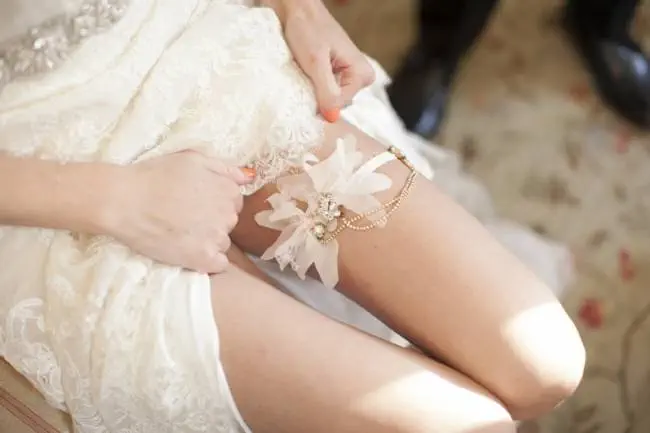
These ribbons have been associated with magical powers of luck, due to which it has become a tradition to hunt for them by male wedding guests. Since the method of throwing the bride over immediately after the marriage ceremony has been too drastic, it has been modified as a tradition for the new wife herself to throw the ribbon to the wedding guests.
It is a symbol of the bride's connection with her family and past. Therefore, they are family jewelry, lace or handkerchief on the wedding day.
Similarly, it is a symbol of the future, the beginning of a new life. It can be anything - flowers, a dress, a ring.
A tradition in which another happily married wife lends something to the new wife. So,
bride borrows a little of this woman's happiness.
The blue color symbolizes everything necessary for the wedding day - trust, purity and nobility.
If once the newlyweds' outfits were decorated with blue ribbons, nowadays something more inconspicuous is enough - blue nail polish or blue shoe soles.
Photo - publicity photo