Modern wedding planning is an exciting search for balance between deeply rooted traditions and the ease provided by modern technology. The moment wedding venue and date are chosen, couples face one of the first tactical decisions – how to address their guests?
While some young couples cannot imagine their celebration without a tangible, heavy paper invitation and a hand-filled RSVP card, others choose absolute digital freedom. Digital wedding invitations and websites are no longer just a budget alternative – it is a new philosophy that changes how we communicate about our celebration of love. So let's look at – how to choose your path and what are the true behind-the-scenes and costs of both choices?
The classic, requiring investment
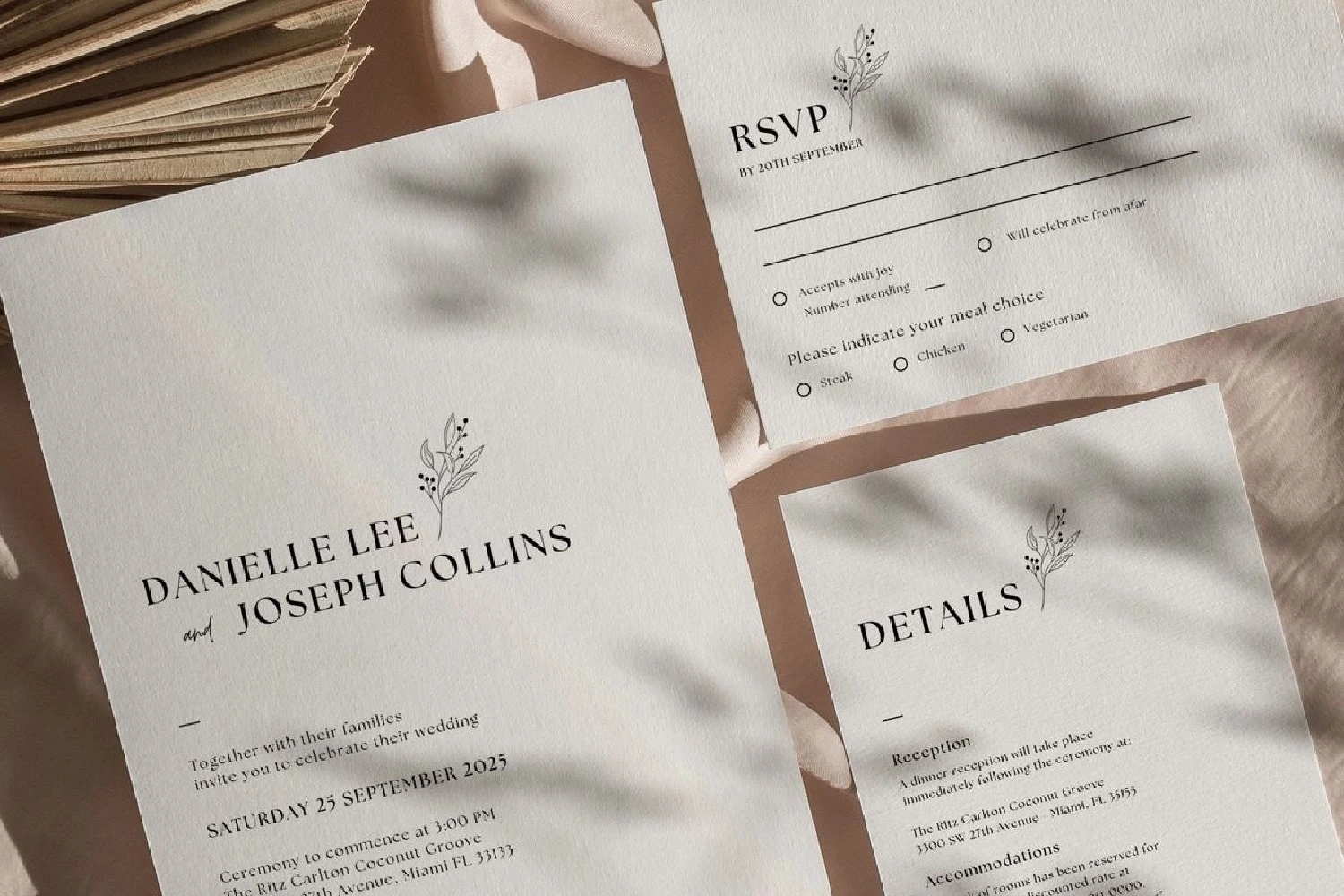
A physical, hand-addressed invitation, wrapped with a silk ribbon and sealed with a personalized wax seal, creates the first, truly personal connection to the upcoming event. It is a work of art that guests often keep for months on their mantelpiece or pin to an inspiration board.
However, the paper format has its practical challenges. The classic RSVP (French: répondez s'il vous plaît or please respond) format dictates that the guest fills out the small card and sends it back to the couple by mail. This means that the couple must provide not only the design and printing of RSVP cards, but also return envelopes with pre-affixed stamps.
Printing costs and mail logistics
When planning the budget, it should be noted that the printing costs of paper invitations in Riga largely depend on the chosen technique. While simple digital printing on standard design paper is relatively affordable, then high-end techniques, such as hot foil stamping, letterpress ( letterpress ) or handmade paper with deckled edges, require serious investment.
In Riga's leading printing studios, the development of individual designs and the printing of 50 exquisite invitation sets (main card, details card, RSVP, and envelope) can range from 250 to 800 euros and more. Additionally, postage costs must be added, which increase if some guests live abroad. 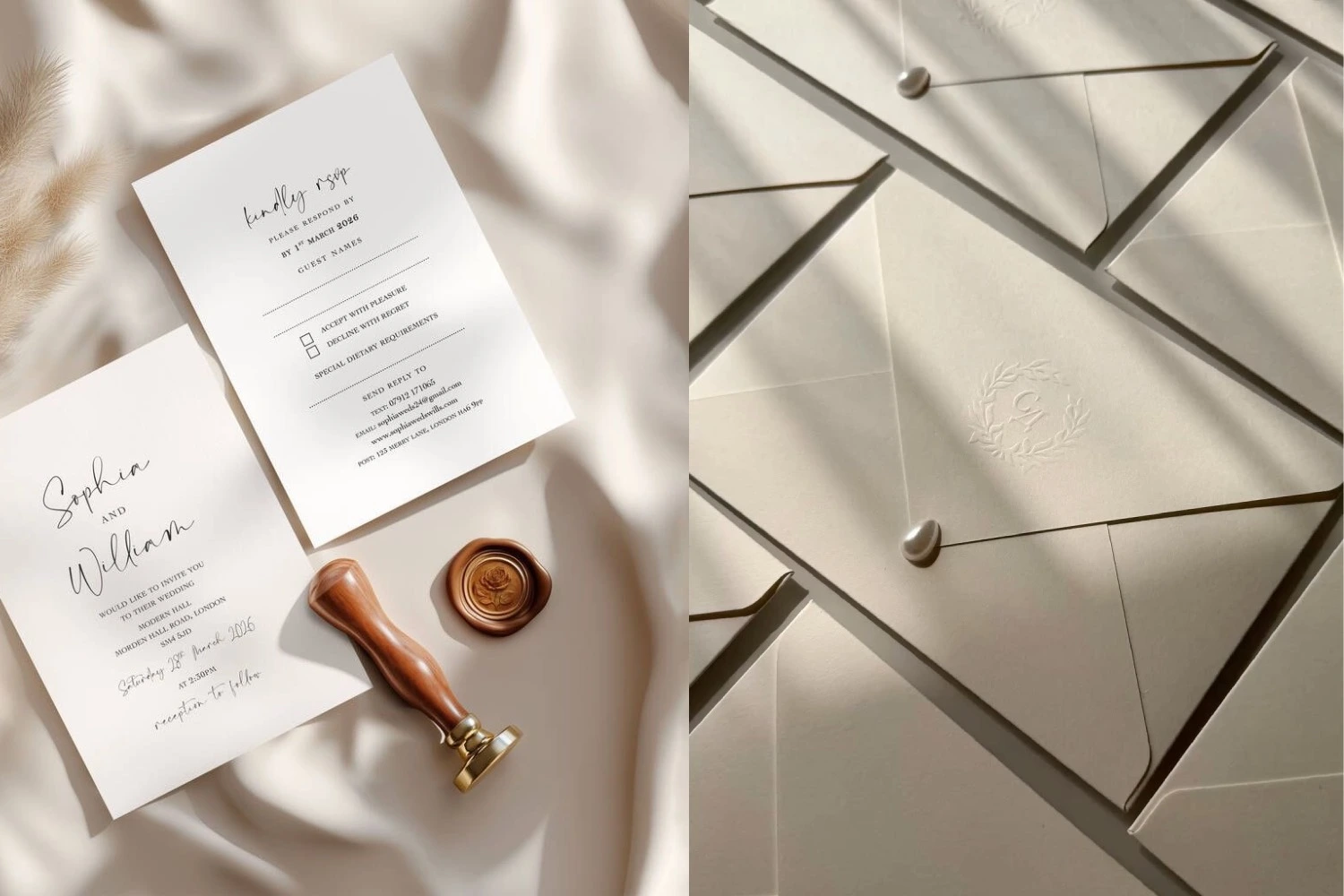
Photo: PINTEREST
Wedding website as your celebration compass
On the opposite side of the scale are digital solutions. They are no longer limited to a simple PDF file sent via the WhatsApp app. Nowadays, couples create personalized and visually stunning websites with an integrated smart online RSVP system.
The biggest plus of the digital approach is the dynamism of information and ease of organization. You don't have to worry about mail delays or lost letters – data is updated in real-time.
This step in the online RSVP system proceeds completely seamlessly and instantaneously. The moment a guest fills out the registration form on their smartphone or computer, all data automatically enters a unified, structured table. This provides the couple with an immediate and convenient overview of the number of guests, dietary habits, and preferences without any manual information gathering.
What can modern guest registration tools do?
The Wedding website functions as a permanent information center. Here guests can find at any time:
- The exact event location with an integrated Google Maps link.
- The day's schedule, gift wishes, and recommendations for the clothing color palette.
- Detailed survey questions – for example, about dietary habits, allergies, or their favorite song they would like to hear on the dance floor.
Such guest registration tools completely lift the burden from the couple's shoulders. You don't have to manually compile each guest's responses in an Excel table – the program does it all for you, structuring information about food choices or required sleeping arrangements in a matter of seconds. 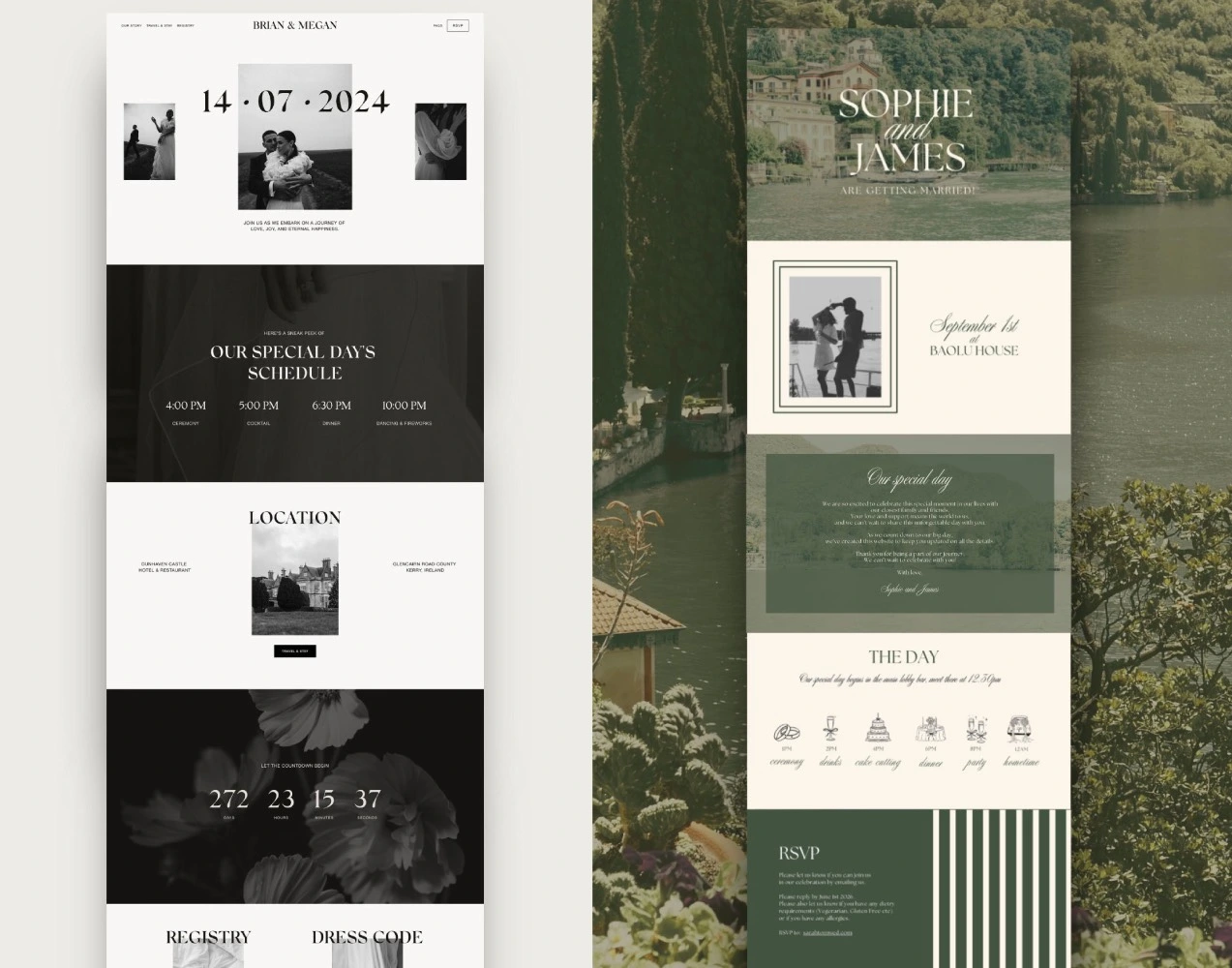
Photo: PINTEREST
Cost and value comparison
To help make a decision, it's worth looking at both formats through the prism of pragmatic pros, cons, and financial investments.
Digital website
- Pros : Dynamic data collection, instant guest reachability, ability to make last-minute program changes, eco-friendly choice.
- Cons: May lack the tangible solemnity of the celebration. Older generations sometimes find it harder to navigate online forms.
- Costs: It is possible to create a wedding website for free, using global platforms with ready-made templates ( Wix, Squarespace or specialized wedding resources). Paid versions or hiring an individual programmer to create a unique ad-free design will cost from 50 to 300 euros.
Paper invitations
- Pros: Irresistible tactile experience, a sense of luxury, a lasting physical memento of your wedding day.
- Cons: Static information (if something changes, you won't reprint the invitations), manual response tracking, possible shipping delays.
- Costs: From 250 euros for simpler print runs up to 1000+ euros for sophisticated author design and premium materials.
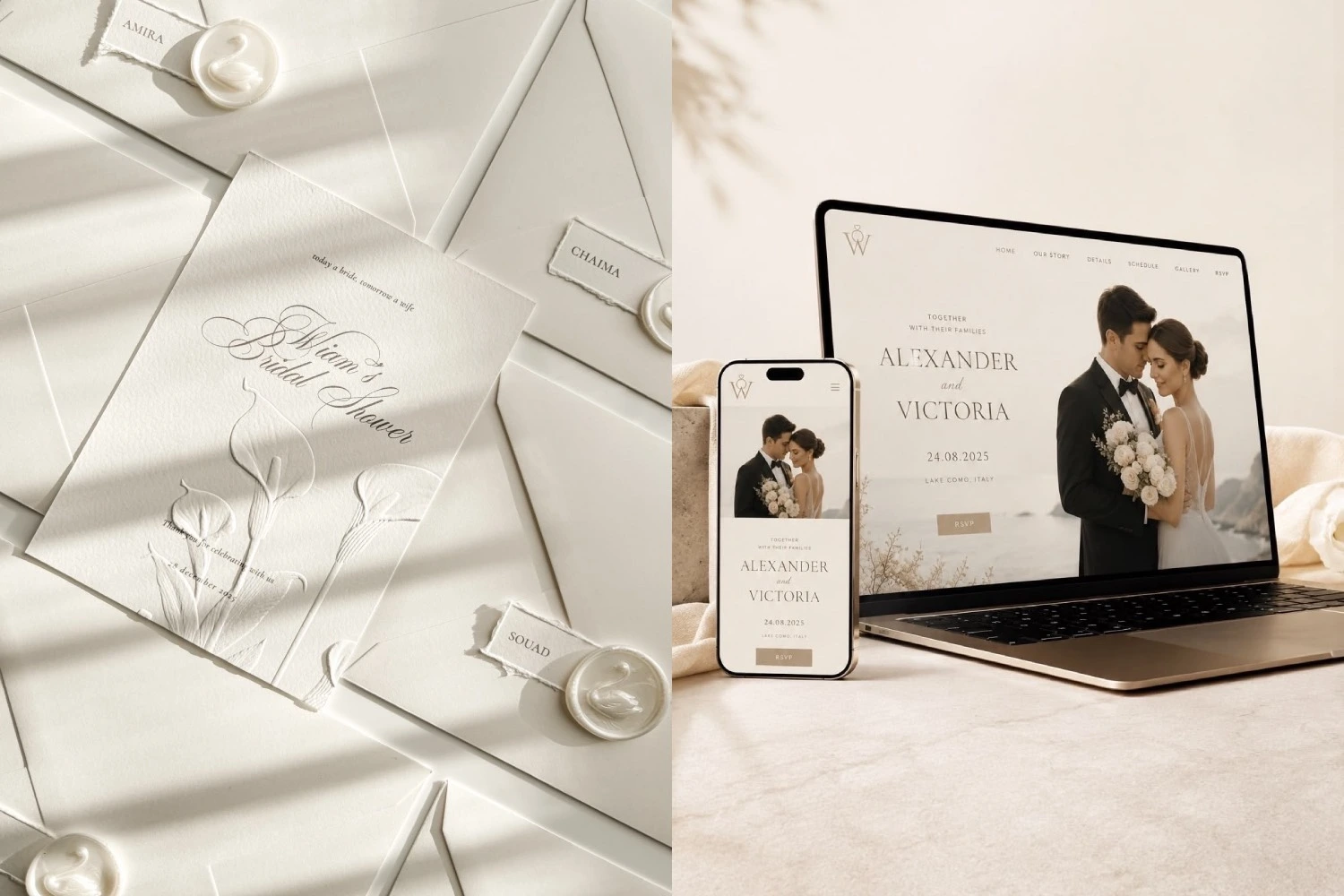
Photo: PINTEREST
The best of both worlds
Many modern couples choose not to give up one or the other, but rather to elegantly combine them. This is an excellent way to create sustainable wedding invitations while not losing the advantages of the digital age.
In a hybrid model, guests receive a luxurious and minimalist invitation card by mail. Long texts about hotel reservations or bus schedules are not printed on it. Instead, a tastefully integrated QR code or a personalized website link is on the back or in the bottom corner of the card. By scanning this code, the guest lands on your wedding website, where they can conveniently complete the digital RSVP and get acquainted with all the celebration nuances. This approach saves money on printing additional detail cards and RSVP envelopes, while preserving the first physical touch of luxury.
What to do if grandparents and older relatives don't know how to use QR codes and digital RSVP?
This is the most common reason why couples are afraid to fully switch to the digital format. The solution is simple and heartfelt – prepare a few paper RSVP versions specifically for older relatives or entrust their registration to the best man/maid of honor or parents, who will clarify their wishes by phone and manually enter them on the website. To learn more about how to balance celebration etiquette, read our articles on Ligavam.lv in the Tips section.
Where to find talented designers who can create both paper invitations and a consistent digital website design?
Bespoke wedding design requires an excellent sense of style, for the paper texture and website's visual identity to align in a cohesive story. In Latvia, fantastic artists and design studios specialize specifically in creating premium paper and brand identity for your celebration. Look for professional creators and their portfolios on Ligavam.lv in the Wedding Invitations section.
How does sustainability affect the choice between paper and technology?
Environmental protection and the ecological footprint are significant arguments in favor of digital invitations. If you still don't want to give up paper, look for decorators and printing masters who work with certified recycled paper or plant-based inks. Ideas and contacts for a greener celebration concept can be found in our compilations on Ligavam.lv in the Inspiration section.
How to ensure that the digital wedding website is secure and guest data will not become publicly accessible?
When using specialized wedding registration tools or ordering a custom website from a programmer, ensure that the website has a security protocol (HTTPS) enabled and, preferably, an access password. This can be sent to guests along with the initial notification, ensuring that photos and private information will only be visible to your chosen circle of guests. For tips on secure and well-thought-out wedding technical organization, look on Ligavam.lv in the Wedding Planning section.

 share
share