Modern weddings in the Baltics are moving more and more away from the old and very outdated idea that wedding gifts are things or objects. Instead, in recent years, a simple envelope has dominated, which has become a symbol of trust and support for the young couple. It's not just money. It is a participation in the beginning of their new life.
However, every invitation raises an uncomfortable question. It's not a question of whether you can wear black pants when the dress code's color palette calls for pastels. When writing a wish line on a greeting card that says “ Bitter !”, every guest has a more socially complex question and thoughts: How much money to give to the new couple at the wedding?
At the festive table, three very different worlds virtually meet - the closeness of relationships, common courtesy and the very practical financial reality of each guest. No matter how elegantly designed the invitation is, no matter how magical and romantic the ceremony promises to be in the park of Liepupe manor or in a small church, guests almost always come to the same internal calculation before the event: what is decent, how much is too little and where does excess begin?
The unwritten etiquette of wedding gifts
The gift-giving culture in Latvia has undergone noticeable changes in the last ten years. The older generation still remembers the times when the new couple was given tableware, crystal vases, bedding sets or even refrigerators. It was a practical necessity in an era when starting a new life required completely outfitting a farm from scratch.
Today, most couples have been living together for years before the wedding. They share a home, a furnished kitchen and a coffee machine. Physical possessions, unless they are a specially commissioned piece of art or a personal heirloom, are more often a burden than a joy. So the envelope has become a two-way deal: the couple receives resources for their big goals (down payment, honeymoon, wedding expenses), but the guest is freed from grueling shopping marathons.
However, this system has not made the situation emotionally easier. Along with physical gifts, a clear amount has disappeared, which used to define social boundaries, at least symbolically. When you gave an expensive designer dinnerware set, the value was evident in the brand and quality. Now, standing with a banknote in his hands, the guest remains face to face with his self-assessment and the question - how much is adequate?
An unwritten but very alive and functioning logic in Latvian society appears here, which is made up of several variables:
- Closeness of relationship: Are you a brother, a best friend from childhood, or just a colleague who has known for a couple of years from the next department?
- Number of guests: Are you going to the wedding alone, or are you representing a whole family, where two adults and two teenagers will sit at the table?
- Wedding format and location: Is it a two-day celebration with an overnight stay and full board in a manor house, or a few-hour cocktail party in a city garden after the registry office?
- Personal financial situation: How big a hole will this payment leave in your monthly budget?
And above all there is another factor, which is rarely talked about in public, but which always quietly exists - the guest's inner feeling of his belonging and importance in the specific event. 
Photo: PINTEREST
What do people in the wedding industry say?
Behind all the discussions about numbers, "correct" amounts and unwritten rules are actually people who see the wedding from a completely different point of view - not as guests, but as observers of the process from start to finish. Every week, wedding planners see how envelopes end up in gift boxes, how guests try to find a balance between propriety and their means, and how this issue is rarely as mathematical in reality as it might seem from the outside.
Their observation is quite consistent: in recent years, guests are less and less looking for the "right" amount as an external formula and more and more often trying to understand the quality of their relationship with the couple. This means that the envelope is no longer just a social obligation or tradition, but becomes part of the language of relationships - sometimes intuitive, sometimes very personal, and almost never completely mechanical.
In this context BANNTÉ EVENTS representative, wedding organizer Inga Bērziņa emphasizes that the greatest tension usually does not arise in the act of gifting itself, but in ideas about how it "should be".
"People often overestimate the importance of rules. In fact, there is no single formula at a wedding that determines how much is "correct" to put in an envelope. Guests feel very much when they are invited from the heart, not by calculation, and in the same way they also give gifts - according to the relationship, not according to the table," - Inga Bērziņa, BANNTÉ EVENTS
She also points out that not only the attitude has changed in recent years, but also the logistics themselves. Especially couples who live outside of Latvia are increasingly choosing digital transfers or pre-defined wedding funds, because it is simply more practical and safer. This trend is not a departure from tradition - rather, its adaptation to the rhythm of modern life.
This transition from strict etiquette to a flexible, lively approach is what currently most accurately characterizes Baltic wedding culture. Less pressure, less comparison, more trust between the couple and their guests – and therefore more room for true presence. 
Photo: PINTEREST
The awkward comparison
In Internet forums, social network discussions and behind-the-scenes conversations, an unwritten golden rule still stubbornly lives: the amount of the gift in the envelope should at least cover the cost of one person at the wedding venue. That is, the guest would have to pay what he thinks the couple has spent on his food, drinks, and possibly lodging.
At first glance, this sounds logical and even fair. It's a kind of reciprocal exchange so that the couple is not left in the red after their big day. However, in reality, from the point of view of modern wedding philosophy and industry professionals, this is a very slippery and even flawed criterion.
First of all, a wedding guest can almost never know exactly the actual cost of a wedding. One event in a fine restaurant can cost less than a visually simple open-air wedding, where it was necessary to build tents, rent kitchen equipment, provide electricity generators and logistics. The amount spent is not just food; they are decorators, florists, lighting, sound directors and managers. An attempt to divide it all "on the heads" turns into an unsolvable mathematical equation with too many unknowns.
Secondly, this principle creates deep social injustice. Different guests at the same event consume exactly the same material experience – they eat the same salmon, drink the same champagne and sleep in equivalent beds. However, their relationship with the couple and their life situations are drastically different. Should a student who is the groom's cousin have to put as much in the envelope as a wealthy businessman who is a business partner of the father of the bride, just because they both eat the same food? Definitely not.
Thirdly, and this is the most important thing – a wedding is not a commercial event, a visit to a restaurant or a ticket to the Zushi band's concert in the front row. It is a celebration where the couple consciously and voluntarily invests in the celebration of their life. They invite people because they want to see them next to them in their moment of celebration of happiness and love, not because they want to sell the experience and get back their investment with profit or zero. If a couple plans a wedding with the idea of making money for it at the expense of the guests, this is the wrong intention from the start, which puts an unnecessary, unpleasant burden on the guests. Therefore, this comparison is considered very outdated from a professional point of view, although it still lives on in the self-created myths of wedding guests. 
Photo: PINTEREST
Approximate borders in the reality of Latvian weddings
Although there are no universal laws and no one should feel limited by specific numbers, in Latvian and Baltic wedding culture, very rough, fluid boundaries of social orientation have developed over time. They help guests orient themselves in a situation where there is no point of reference. It is important to emphasize that these numbers are not requirements or a price list - they are just observations of how the majority of society behaves.
Looking at the situation realistically, the amounts are most often graded according to the following principle and are calculated assuming that the donor is one adult (if a couple goes, the amount is proportionally increased, but not necessarily doubled exactly):
Acquaintances, distant relatives, work colleagues
These are the times when your relationship is good, but you don't share your deepest secrets and know the nuances of each other's lives on a daily basis. You are invited as pleasant companions to extend the joy of the holiday. In such a situation, a symbolic, decent amount of support is usually chosen in Latvia - approximately 50 to 100 euros per person. It shows respect, affirms enjoyment of the event, and serves as a solid, unobtrusive wish.
Friends and good acquaintances
This is the largest group of wedding guests. People with whom we celebrate birthdays, go to events and communicate regularly. This is where the scope of the gift becomes a bit more personal. The average in this group ranges from 100 to 150 euros per person (or around 200 euros per couple). This amount is perceived in society as a stable standard, which allows both the giver and the recipient to feel comfortable. It clearly confirms: you are important to me, and I want to help the budget of your new family.
Close friends, godparents and family
Brothers, sisters, best friends who stand side by side at the altar as witnesses, and godparents who play a special role in a person's life. Here, the gift already turns into a serious investment and start-up capital. Amounts usually start from 150 to 250 euros per person and can go much higher, depending on the possibilities. People close to them often want to help the new couple realize a specific dream - for example, paying for the plane tickets for the wedding trip in full or helping to cover the down payment on the purchase of a property.
Parents and grandparents
This is a completely separate category where all market laws cease to apply. A wedding gift from parents is often an emotional and financial gesture. Sometimes the parents have already contributed financially to the wedding, which in itself is a huge gift. If they do give an envelope, the amounts are often in the four figures or take the form of valuable gifts of real estate, land or family heirlooms. But even here - if the parents' pension or income is small, any couple will value their presence and blessing more than the amount of money taken in debt.
| Guest status | Approximate amount (per person) | Symbolic Meaning |
|---|
| Colleagues, acquaintances | 50 – 100 EUR | Politeness, respect, proof of attention |
| Friends | 100 – 150 EUR | Stable social standard, real support |
| Close friends, godparents | 150 – 250+ EUR | Close connection, significant start-up capital |
| Parents, closest relatives | Individualized / 500+ EUR | Family inheritance, maximum support |
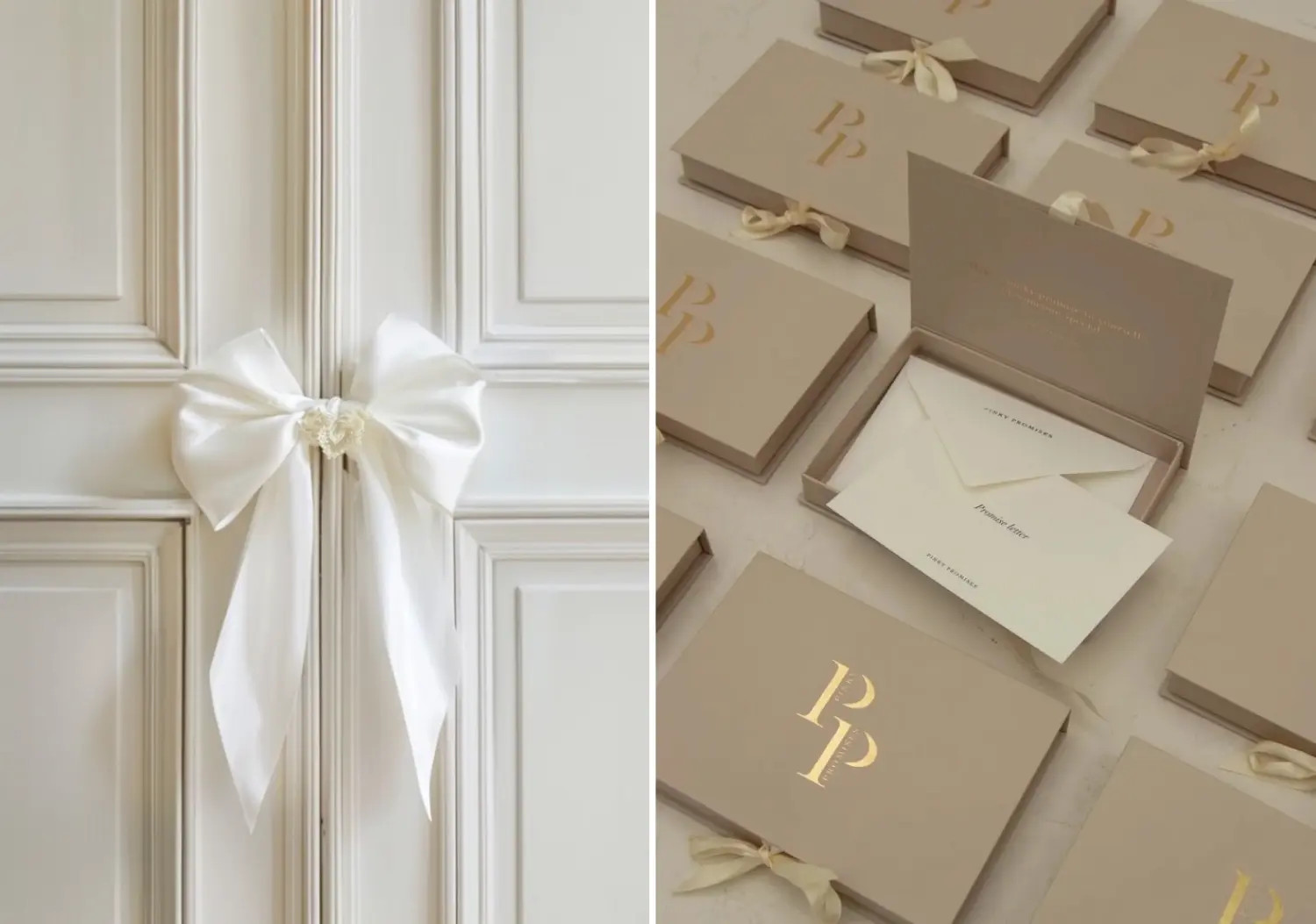
Photo: PINTEREST
Does the scale of the wedding determine the price of the gift?
One of the most frequent and exhausting internal conflicts that wedding guests face is the feeling that the outward splendor and scale of the wedding automatically dictates the thickness of the envelope's contents. A stereotypical proportion naturally works in the human mind: a large, luxurious wedding in a manor - therefore a larger envelope, and a smaller, simple garden wedding - a smaller envelope. However, when we look at this situation honestly and deeply, this assumption seems unfair and even wrong.
The cost and scale of the wedding reflects the personal choices of the young couple, their financial capabilities, ambitions and aesthetic preferences. Guests have no control over these choices. If a couple decides to order an exclusive chef from abroad, rent the most expensive palace in the country and decorate the rooms with thousands of imported flowers, this is their conscious choice and their gift to themselves and their guests. The guest should not feel guilty or forced to pay a "fee" for a luxury that he himself did not order and probably would not even choose in his everyday life.
And vice versa - if a couple chooses a very minimalistic, intimate wedding in the backyard of their country house with self-made snacks and a sweater instead of a jacket, it does not mean that their love or this event is less valuable. Their close friends shouldn't put less money in the envelope just because the couple spent less on the celebration. The purpose of the gift is to support people, not to compensate for their current estimation positions. Your relationship with your friend does not change depending on whether he treats you to caviar or home-baked patties. 
Photo: PINTEREST
The emotional side that is not talked about
Behind all these discussions about numbers, borders and banknotes, in fact, a much deeper, purely human factor is hidden - it is our fear of making mistakes and being misunderstood. None of us wants to be the guest who, when counting the gifts at the couple's night, is quietly identified as the one who "gave too little" or "skipped". It is a normal desire to maintain your reputation and good relations. And just as few people want to go to the other extreme - to give so much that it looks like a conspicuous demonstration, which makes the couple themselves feel uncomfortable and indebted.
That is why the envelope has become such an ingenious and convenient social tool today. It offers two seemingly opposite but equally important things: complete visual discretion and maximum practical involvement. When you put money in an envelope and add a beautiful handwritten card to it, the main focus shifts to your personal words and wish. Inside, the money is just material fuel for their future plans, which remains solely between you and the couple.
Wedding planners advise: If your financial situation is really tight right now, but the wedding is very important to you, don't under any circumstances refuse to participate just because you can't afford a "standard" envelope. For a couple, your presence is more important than paper bills. In such a situation, put the amount you can really afford and compensate it with something emotionally unique - write a letter sharing your shared memories, create a small, personal photo album from the beginning of your friendship, or offer your practical help on the morning of the wedding. Human warmth and true friendship always live beyond any estimates and exchange rates. 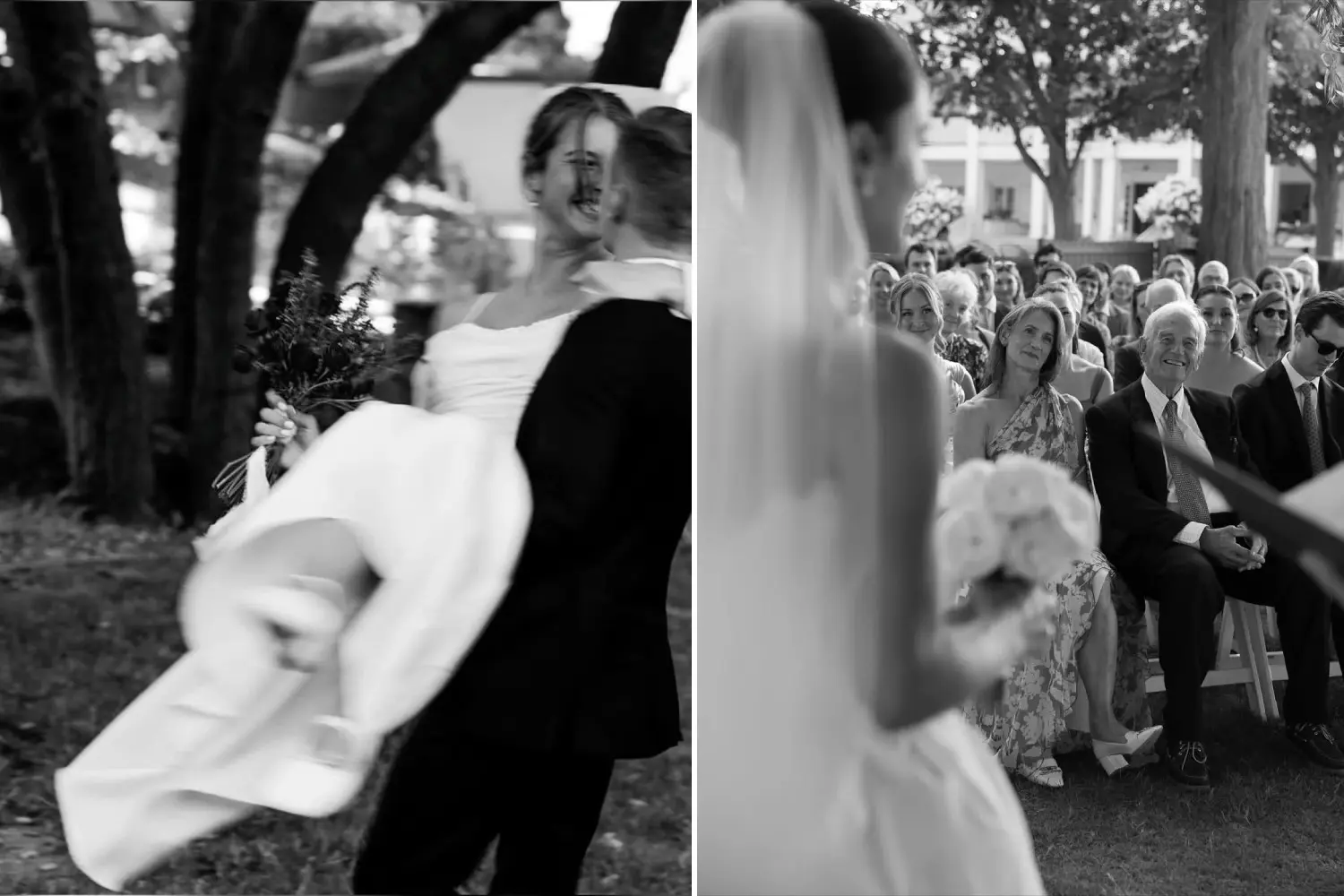
Photo: PINTEREST
Classic questions and answers
How much money to give if a couple or the whole family with children goes to the wedding?
If you are going to the celebration with your partner, it is not necessary to mechanically double the amount, but it is polite to increase it. If the average standard for one friend is 100 euros, then the couple usually puts 150 to 200 euros in the envelope. If children come along, the amount is usually not significantly changed, because the couples themselves are aware that children's participation is a purely family pleasure, and not a financial burden for the guests. You can read more experience stories and recommendations about guest logistics in the For guests & hosts section of ligavam.lv.
Is it mandatory to follow the text "We choose an envelope for the gift" specified in the invitation, or is it permissible to give something else?
Today, such a request is not a whim, but a practical help to the guest by clearly defining the couple's needs. This should be followed when respecting the plans of the newlyweds (for example, if they move abroad immediately after the wedding or plan large purchases). If you do want to give something physical, it should be something very personal, coordinated with the couple. Look for creative alternatives and ideas for gift design at ligavam.lv Ideas & advice in the Gifts section.
How to tastefully and elegantly present a cash gift at a wedding?
Gone are the days when money was folded into intricate origami or stuffed into strange objects. At the moment, minimalism and high-quality paper dominate. Choose an elegant, textured designer paper envelope that matches the overall color palette of the wedding and add a handwritten, personal card. You will find inspiration and ideas for tasteful wedding gifts, as well as current gift trends and elegant design in the Wedding gifts section of ligavam.lv.
What if I am only invited to the ceremony and a glass of champagne, but not to the evening celebration?
In this format, which is becoming increasingly popular in urban weddings, the pressure on the size of the gift completely disappears. Since you are not participating in the full evening program and dinner, the gift is a purely symbolic token of your pleasure. An adequate and decent amount in such a case is 30 to 50 euros per person or simply a beautiful bouquet of flowers and a quality book. Read more about different wedding formats in the article Practical examples of wedding scenarios in the section of ligavam.lv Ideas & advice.
Is it polite to transfer the money to the couple's bank account instead of the envelope?
Yes, nowadays it is considered a very modern, safe and convenient solution, especially if the couple has indicated their wedding fund account number in the invitation. So that you don't arrive at the holidays completely empty-handed at the time of receiving the gift, you can drop a beautiful congratulatory letter in the card box on the wedding day, indicating that the gift is already on its way to their joint account. Learn more about digital solutions and wedding planning tools in the Planning section of ligavam.lv.

 share
share